Today's
EarthStation1.com 15% (Or More!) Off Commemorative Memorial Title:
Animals At War: Animals In The Military + Bonus Title MP4 Download
DVD
Today, August 5, 2026
August 5: Work Like A Dog Day: -- This
quirky day is inspired by the reputed strong work ethic of
canines, especially service dogs. It may be a dog-eat-dog world
out there, which can force you to work like a dog even during the
dog days of summer, so today we honor people who put in that extra
bit of hard work, and pause to appreciate the hard workers who
inspire (or in some cases, frustrate) you. There's no other day
like this one so stick around because we're sharing some fun ideas
for the hard-working canine in you! Although the origin of the
holiday National Work Like A Dog Day is unknown, we'll gladly
inform you about the source of the saying itself. You've probably
heard the phrases "working like a dog" or "it's a
dog's life" when someone is referring to working on a task
without taking any breaks. "Working like a dog" simply
means to go the extra mile and work extremely hard. The saying
comes from farm dogs who work from the crack of dawn till the sun
sets, and sled dogs and sheepdogs that perform grueling tasks
every day. Either way, the quote is a reference to persevering
canines. Sounds relatable? Then today is your day to celebrate!
Whether it is school homework, house chores, office work, or
personal projects, put your maximum effort into getting things
done. Work Like A Dog Day isn't just about personally pushing
yourself to get work done, it is also about showcasing your
determination and dedication for others to notice. There's no
point doing anything half-heartedly, so give it your best shot.
The best part is that after you've "Worked like a dog,"
you can also take a well-deserved long slumber because, after all,
"It's a dog's life." Animals teach us so much, and
working hard to attain your goals is a life lesson that you can't
go wrong with. On Sale Until Midnight Tonight PT!
https://store.earthstation1.com/animals-at-war-military-animals-mp4-video-download-dv4.html
Today's
EarthStation1.com 15% (Or More!) Off Commemorative Memorial Title:
Lum And Abner Old Time Radio Series MP3 Set DVD, Download, USB
Stick
Today, August 5, 2026
August 5: National Underwear Day: -- A
day that provides an opportunity to wear your favorite
undergarments. Boxers. Briefs. Panties. Tighty-whities. No matter
what you call them, our underthings provide a layer of comfort.
Many Americans have heard their mother's warning. "Make sure
to always wear clean underwear. You never know when you will be in
an accident!" While there are other reasons to wear fresh
underwear, this is the one that often comes to mind. Underwear is
the layer of clothing worn closest to the body and under the outer
clothing. It protects clothing from sweat. Underwear also provides
the wearer protection from cold and chafing. Another benefit to
underwear includes support and body shaping. Most of us see these
intimate items of our wardrobe as necessities. However, others
utilize them as accessories. Since fabrics allow underwear to be
designed for specific needs, a wide variety are made for sports
and specific climates. Depending on preference, some select
garments for modesty or to feel alluring. A 2012 survey by
Elitedaily.com reveals that the average woman owns 20 pairs of
underwear - for every day. Then, they own 14 extra pairs for
special occasions. In 2018, retailers reported an increase in the
popularity of nude colors. Instead of bright fashion colors or
sultry bedroom styles, shoppers sought something neutral. Skin
blending shades that disappear under sheer outer clothes won
consumers' dollars. To observe #NationalUnderwearDay, embrace your
body image. Use #NationalUnderwearDay to post on social media. If
you are the bashful type, just wear your underwear around the
house when no one is home. One can also celebrate by watching the
1983 romance comedy Risky Business starring Tom Cruise and Rebecca
De Mornay. While you're wearing your favorite underwear, consider
these brief ways to celebrate. You might even reveal a naked
truth: Read a book about the history of underwear. For example -
Unmentionables: A Brief History of Underwear by Elaine Benson and
John Esten; Buy some new underwear. You can never have too many
pairs; Clean out your underwear drawer (Yes, we know that might be
unbearable), but maybe we were wrong!; Rank your brand of
underwear on a comfort scale. You know, what's the most
comfortable underwear you've ever worn? It might be revealing;
Tell a clean underwear joke - It's harder than you think - but
we'll get you started with these two: How long does it take to put
on a pair of underwear? A brief second - Are you wearing holey
underwear? No? Then how did you put your legs through them?
Freshpair founded National Underwear Day on August 5th, 2003. On
Sale Until Midnight Tonight PT!
https://store.earthstation1.com/lum-and-abner-radio-mp3-dvd-complete-broadcast3.html
Today's
EarthStation1.com 15% (Or More!) Off Commemorative Memorial Title:
Automobile Accident & Drivers Education Films DVD, Download,
USB Drive
Today, August 5, 2026
August 5: International Traffic Light
Day: -- August 5, 1914: The first electric traffic light, invented
in 1912 by Lester Wire, a policeman in Salt Lake City, Utah, is
installed by the American Traffic Signal Company on the corner of
East 105th Street and Euclid Avenue in Cleveland, Ohio.
Accordingly, every year on August 5th, International Traffic Light
Day highlights the importance of the traffic light. It's also a
day that commemorates the installation of the first traffic signal
system. Did you grow up in a small town or rural area? If so, you
may not have grown up with traffic lights. Small towns can usually
get by with stop signs only. However, installing a traffic light
usually means an increase in population. Without these important
lights, it simply would not be safe to drive. Not having traffic
lights would also greatly reduce the flow and speed of traffic.
Some people, however, dispute the location of the world's first
traffic light; in 1868, a traffic device in London helped people
know when to stop and when to use caution. In 1912, a police
officer in Salt Lake City, Utah installed a wooden box with red
and green lights onto a pole. Despite these disputes, the date of
August 5th, 1914 has remained the official date of the world's
first traffic signal. The different kinds of traffic signals have
helped pedestrians, bicyclists, horseback riders, and streetcars
navigate the roadways more safely. Through the years, the amount
of traffic has increased in cities around the world. Increased
traffic usually means more traffic lights. However, more traffic
lights don't necessarily mean less congestion. Sometimes, the
traffic lights aren't in sync. Also, green lights might be too
short or too long. Both of these issues might contribute to the
world's most congested cities, which include Manila, Bogota, Lima,
Moscow, Istanbul, and Jakarta. Four of the most congested cities
are in India. These cities are Bengaluru, Mumbai, Pune, and New
Delhi. Some of the most congested cities in the United States
include Boston, Chicago, New York City, Los Angeles, Baltimore,
and Atlanta. Maybe what these cities need are either fewer drivers
or more properly working traffic lights! So today is a great day
for government officials to discuss how well traffic lights keep
traffic flowing in their community. On Sale Until Midnight Tonight
PT!
https://store.earthstation1.com/automobile-accident-and-drivers-ed-films-3-dual-layer-dvd-se3.html
Today's
EarthStation1.com 15% Off Commemorative Memorial Title: POW:
Americans In Enemy Hands Documentary DVD, Download, USB Drive
Today, August 5, 2026
August 5, 1964: The Aftermath Of World
War II: The Cold War: The Cold War In Asia: The Indochina Wars:
The Vietnam War (The Second Indochina War, The Vietnam Conflict,
The Resistance War Against America): The United States In The
Vietnam War: The Gulf of Tonkin Incidents (Vietnamese: Su Kien
Vinh Bac Bo): The Second Gulf Of Tonkin Incident: Operation Pierce
Arrow: -- In the first U.S. air operation of the Vietnam War over
North Vietnam and Southeast Asia, aircraft from carriers USS
Ticonderoga and USS Constellation bomb North Vietnam in
retaliation for strikes against U.S. destroyers in the Gulf Of
Tonkin. Operation Pierce Arrow was the U.S. bombing campaign at
the beginning of the Vietnam War in response to the Gulf Of Tonkin
Incident, when the destroyers USS Maddox and USS Turner Joy of the
United States Navy engaged North Vietnamese ships, sustaining
light damage as they gathered electronic intelligence while in the
international waters of the Gulf Of Tonkin. U.S. President Lyndon
B. Johnson ordered Operation "Pierce Arrow" which was
began on 5 August 1964. The operation consisted of 64 strike
sorties of aircraft from the aircraft carriers USS Ticonderoga and
USS Constellation against the torpedo boat bases of Hon Gai, Loc
Chao, Quang Khe, and Phuc Loi, and the oil storage depot at Vinh.
The U.S. lost two aircraft to anti-aircraft fire, with one pilot
killed, Lieutenant Richard Sather. Another, LTJG. Everett Alvarez
Jr, becomes the first U.S. pilot to be shot down and detained
during the Vietnam War when his Douglas A-4 Skyhawk is shot down.
Everett Alvarez (born December 23, 1937 in Salinas, California)
endured eight years and seven months of brutal captivity by the
North Vietnamese at the Hoa Lo Prison (sarcastically known as the
"Hanoi Hilton" by fellow POWs), in which he was
repeatedly beaten and tortured. He was the second longest-held
U.S. POW during the Vietnam War (after U.S. Army Colonel Floyd
James Thompson's capitivity). Alvarez was especially esteemed by
his fellow prisoners because he was for almost a year the only
aviator prisoner of war. Pilots estimated that the Vinh raid
destroyed 10 percent of North Vietnam's entire petroleum storage,
together with the destruction of or damage to 29 P-4 torpedo boats
or gunboats. This was the start of U.S. air operations over North
Vietnam and Southeast Asia, attempting to destroy the
infrastructure, war material, and military units needed by North
Vietnam to prosecute the guerrilla war in the South. The air
operations following Pierce Arrow would swell so that by war's
end, the United States bombing campaign was the longest and
heaviest in history. The 7,662,000 tons of bombs dropped in
Southeast Asia during the Vietnam War nearly quadrupled the
2,150,000 tons the U.S. had dropped during World War II. On Sale @
15% Off Discount Till Midnight PT! On Sale Until Midnight Tonight
PT!
https://store.earthstation1.com/pow-americans-in-enemy-hands--wwii-korea-vietnam-dvd.html
Today's
EarthStation1.com 15% (Or More!) Off Commemorative Memorial Title:
The Strangest Planes In The World DVD, MP4 Download, USB Flash
Drive
Today, August 5, 2026
August 5, 1930: #BOTD: #HBD! Neil
Armstrong, American pilot, engineer, and astronaut who was the
first man to walk on the moon (d. August 25, 2012) is #born Neil
Alden Armstrong in Wapakoneta, Ohio. He was also an aerospace
engineer, naval aviator, test pilot, and university professor.
Before becoming an astronaut, Armstrong was an officer in the U.S.
Navy and served in the Korean War, flying the Grumman F9F Panther
from the aircraft carrier USS Essex. After the war, he earned his
bachelor' degree at Purdue University and served as a test pilot
at the National Advisory Committee for Aeronautics (NACA)
High-Speed Flight Station, where he logged over 900 flights,
including some in the X-15. He was also participant in the X-20
Dyna-Soar human spaceflight program. He joined the NASA Astronaut
Corps in 1962. He made his first space flight as command pilot of
Gemini 8 in March 1966, becoming NASA' first civilian astronaut to
fly in space. He performed the first docking of two spacecraft,
with pilot David Scott. Armstrong' second and last spaceflight was
as commander of Apollo 11, the first manned Moon landing mission
in July 1969. Armstrong and Lunar Module pilot Buzz Aldrin
descended to the lunar surface and spent two and a half hours
outside the spacecraft, while Michael Collins remained in lunar
orbit in the Command/Service Module. When Armstrong stepped onto
the lunar surface, he famously said: "That's one small step
for [a] man, one giant leap for mankind." Along with Collins
and Aldrin, Armstrong was awarded the Presidential Medal Of
Freedom by President Richard Nixon. President Jimmy Carter
presented Armstrong the Congressional Space Medal Of Honor in
1978. Armstrong and his former crewmates received the
Congressional Gold Medal in 2009. Neil Armstrong died of
complications from an August 7 bypass surgery at Mercy
Faith-Fairfield Hospital in Cincinnati, Ohio to relieve coronary
artery disease, aged 82; on that same day, the Voyager 1
spacecraft entered interstellar space, becoming the first man-made
object to do so. President Barack Obama issued a statement
memorializing Armstrong as "among the greatest of American
heroes-not just of his time, but of all time", and added that
Armstrong had carried the aspirations of the United States'
citizens and had delivered "a moment of human achievement
that will never be forgotten." Armstrong's family released a
statement, which included "For those who may ask what they
can do to honor Neil, we have a simple request. Honor his example
of service, accomplishment and modesty, and the next time you walk
outside on a clear night and see the moon smiling down at you,
think of Neil Armstrong and give him a wink." It prompted
many responses, including the Twitter hashtag "#WinkAtTheMoon".
Buzz Aldrin called Armstrong "a true American hero and the
best pilot I ever knew", and said he was disappointed that
they would not be able to celebrate the 50th anniversary of the
Moon landing together in 2019. Michael Collins said, "He was
the best, and I will miss him terribly." A tribute was held
for Armstrong on September 13, at Washington National Cathedral,
whose Space Window depicts the Apollo 11 mission and holds a
sliver of Moon rock amid its stained-glass panels. In attendance
were Armstrong's Apollo 11 crewmates, Collins and Aldrin; Gene
Cernan, the Apollo 17 mission commander and last man to walk on
the Moon; and former senator and astronaut John Glenn, the first
American to orbit the Earth. In his eulogy, Charles Bolden praised
Armstrong's "courage, grace, and humility". Cernan
recalled Armstrong's low-fuel approach to the Moon: "When the
gauge says empty, we all know there's a gallon or two left in the
tank!" Diana Krall sang the song "Fly Me to the Moon".
Collins led prayers. David Scott spoke, possibly for the first
time, about an incident during their Gemini 8 mission: minutes
before the hatch was to be sealed, a small chip of dried glue fell
into the latch of his harness and prevented it from being buckled,
threatening to abort the mission. Armstrong then called on Conrad
to solve the problem, which he did, and the mission proceeded.
"That happened because Neil Armstrong was a team player - he
always worked on behalf of the team." On September 14,
Armstrong's cremated remains were scattered in the Atlantic Ocean
from the USS Philippine Sea. Flags were flown at half-staff on the
day of Armstrong's funeral. In July 2019, after observations of
the 50th anniversary of the Moon landing, The New York Times
reported on details of a medical malpractice suit Armstrong's
family had filed against Mercy Health-Fairfield Hospital, where he
died. When Armstrong appeared to be recovering from his bypass
surgery, nurses removed the wires connected to his temporary
pacemaker. He began to bleed internally and his blood pressure
dropped. Doctors took him to the hospital's catheterization
laboratory, and only later began operating. Two of the three
physicians who reviewed the medical files during the lawsuit
called this a serious error, saying surgery should have begun
immediately; experts the Times talked to, while qualifying their
judgement by noting that they were unable to review the specific
records in the case, said that taking a patient directly to the
operating room under those circumstances generally gave them the
highest chance of survival. The family ultimately settled for 6M
USD in 2014. Letters included with the 93 pages of documents sent
to the Times by an unknown individual show that his sons intimated
to the hospital, through their lawyers, that they might discuss
what happened to their father publicly at the 45th anniversary
observances in 2014. The hospital, fearing the bad publicity that
would result from being accused of negligently causing the death
of a revered figure such as Armstrong, agreed to pay as long as
the family never spoke about the suit or the settlement.
Armstrong's wife, Carol, was not a party to the lawsuit. She
reportedly felt that her husband would have been opposed to taking
legal action. On Sale Until Midnight Tonight PT!
https://store.earthstation1.com/the-strangest-planes-in-the-world-dvd-mp4-us4.html
Today's
EarthStation1.com 15% (Or More!) Off Commemorative Memorial Title:
Alternative Revolver Beatles MP3 CD Audio Download USB Flash Drive
Today, August 5, 2026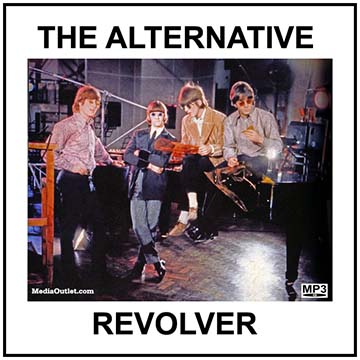
August 5, 1966: Aesthetics: The
Performing Arts: Music: Music History: The History Of Rock And
Roll (Rock & Roll, Rock-N-Roll, Rock 'N' Roll, Rock 'N Roll,
Rock N' Roll): British Rock And Roll (British Rock & Roll,
British Rock-N-Roll, British Rock 'N' Roll, British Rock 'N Roll,
British Rock N' Roll): The Swinging Sixties: Music Of The United
Kingdom: Rock And Roll (Rock & Roll, Rock-N-Roll, Rock 'N'
Roll, Rock 'N Roll, Rock N' Roll): Concerts: British Rock (Beat
Music, British Beat, Merseybeat): The Swinging Sixties: Music Of
The United Kingdom: Rock And Roll (Rock & Roll, Rock-N-Roll,
Rock 'N' Roll, Rock 'N Roll, Rock N' Roll): The British Invasion:
The Beatles: Record Releases: -- The Beatles album Revolver is
released, the seventh studio album by the English rock band the
Beatles, accompanied by the double A-side single "Eleanor
Rigby" / "Yellow Submarine". The album was the
Beatles' final recording project before their retirement as live
performers and marked the group's most overt use of studio
technology to date, building on the advances of their late 1965
release Rubber Soul. It has since become regarded as one of the
greatest and most innovative albums in the history of popular
music, with recognition centred on its range of musical styles,
diverse sounds, and lyrical content. The Beatles recorded Revolver
after taking a three-month break at the start of 1966, and during
a period when London was feted as the era's cultural capital.
Regarded by some commentators as the start of the group's
psychedelic period, the songs reflect their interest in the drug
LSD, Eastern philosophy and the avant-garde while addressing
themes such as death and transcendence from material concerns.
With no plans to reproduce their new material in concert, the band
made liberal use of automatic double tracking, varispeed, reversed
tapes, close audio miking, and instruments outside of their
standard live set-up. Among its tracks are "Tomorrow Never
Knows", incorporating heavy Indian drone and a collage of
tape loops; "Eleanor Rigby", a song about loneliness
featuring a string octet as its only musical backing; and "Love
You To", a foray into Hindustani classical music. The
sessions also produced a non-album single, "Paperback Writer"
backed with "Rain". In the United Kingdom, the album's
14 tracks were gradually distributed to radio stations in the
weeks before its release. In North America, Revolver was reduced
to 11 songs by Capitol Records, with the omitted three appearing
on the June 1966 LP Yesterday and Today. The release there
coincided with the Beatles' final concert tour and the controversy
surrounding John Lennon's remark that the band had become "more
popular than Jesus". The album topped the Record Retailer
chart in the UK for seven weeks and the US Billboard Top LPs list
for six weeks. Critical reaction was highly favourable in the UK
but less so in the US amid the press's unease at the band's
outspokenness on contemporary issues. Revolver expanded the
boundaries of pop music, revolutionised standard practices in
studio recording, advanced principles espoused by the 1960s
counterculture, and inspired the development of psychedelic rock,
electronica, progressive rock and world music. The album cover,
designed by Klaus Voormann, combined Aubrey Beardsley-inspired
line drawing with photo collage and won the 1967 Grammy Award for
Best Album Cover, Graphic Arts. Aided by the 1987 international CD
release, which standardised its content to the original Parlophone
version, Revolver has surpassed Sgt. Pepper's Lonely Hearts Club
Band in many critics' estimation as the Beatles' best album. It
was ranked first in the 1998 and 2000 editions of Colin Larkin's
book All Time Top 1000 Albums and third in the 2003 and 2012
editions of Rolling Stone magazine's list of the "500
Greatest Albums of All Time". It has been certified double
platinum by the BPI and 5x platinum by the RIAA. On Sale Until
Midnight Tonight PT!
https://store.earthstation1.com/alternative-revolver-beatles-mp3-cd-audio-download-usb-flash-driv3.html
Today's
EarthStation1.com 15% (Or More!) Off Commemorative Memorial Title:
Eyes On The Prize II: America At The Racial Crossroads DVD MP4 USB
Today, August 5, 2026
August 5, 1966: Civil Rights Movements:
The American Civil Rights Movement (1954-1968): Housing (Living
Spaces): Anti-Black Racism In The United States: Housing
Discrimination In The United States: Desegregation In The United
States: Marquette Park Rallies: The Chicago Freedom Movement: The
1966 Marquette Park March: -- In what Martin Luther King later
stated, and Ralph Abernathy wrote, was the civil rights movement's
worst reception by any town North or South, The Chicago Freedom
Movement's Marquette Park March was met with bricks, bottles and a
variety of other missiles thrown by screaming white throngs. A
white riot against the march seemed very possible. King's beliefs
precluded his staging an event that would foster such violence,
and he negotiated an agreement with Chicago Mayor Richard J. Daley
to cancel a march in order to avoid violence. King, James Bevel
and others in the civil rights organizations took the movement to
the North, after several successes in the south, with Chicago as
their first destination. King and Ralph Abernathy, both from the
middle class, moved into a building at 1550 S. Hamlin Avenue, in
the slums of North Lawndale on Chicago's West Side, as an
educational experience and to demonstrate their support and
empathy for the poor. The Chicago Freedom Movement, also known as
the Chicago Open Housing Movement, the most ambitious civil rights
campaign in the American North and largely responsible for
inspiring the 1968 Fair Housing Act, was led by Martin Luther King
Jr., James Bevel and Al Raby, and lasted from mid-1965 to August
1966. It was supported by the Chicago-based Coordinating Council
of Community Organizations (CCCO) and the Southern Christian
Leadership Conference (SCLC). The movement included a large rally,
marches, and demands to the City of Chicago. These specific
demands covered a wide range of areas besides open housing, and
included quality education, transportation and job access, income
and employment, health, wealth generation, crime and the criminal
justice system, community development, tenants rights, and quality
of life. During that spring, several white couple/black couple
tests of real estate offices uncovered racial steering:
discriminatory processing of housing requests by couples who were
exact matches in income, background, number of children, and other
attributes. In protest, several large marches were planned and
executed: in Bogan, Belmont Cragin, Jefferson Park, Evergreen Park
(a suburb southwest of Chicago), Gage Park, Marquette Park, and
others. King was hit by a brick during one march, but continued to
lead marches in the face of personal danger. When King and his
allies returned to the South, they left Jesse Jackson, a seminary
student who had previously joined the movement in the South, in
charge of their organization. Jackson continued their struggle for
civil rights by organizing the Operation Breadbasket Movement,
which sought to harness African American consumer power by
targeting chain stores that did not deal fairly with blacks. On
Sale Until Midnight Tonight PT!
https://store.earthstation1.com/eyes-on-the-prize-ii-dvd-set-4-discs-complete-2nd-seri42.html
Today's
EarthStation1.com 15% (Or More!) Off Commemorative Memorial Title:
Apartheid Documentaries Collection DVD, Video Download, USB Drive
Today, August 5, 2026
August 5, 1962: South Africa: The History
Of South Africa: Segregation: Racial Segregation: Apartheid
(Racial Segregation In South Africa): -- Nelson Mandela and Cecil
Williams are arrested near Howick, KwaZulu-Natal, South Africa,
and charged with incitement of workers' strikes and/or leaving the
country without permission. The Central Intelligence Agency, which
feared Mandela's associations with communists, had informed the
South African police of his location. He was then tried and
sentenced to five years in prison. In 1963, he was placed on trial
for sabotage, high treason and conspiracy to overthrow the
government and was sentenced to life in prison. A worldwide
campaign to free him began in the 1980s and resulted in his
release on February 11, 1990, at age 71 after 27 years in prison.
In 1993, Black Nationalist Freemason Mandela shared the Nobel
Peace Prize with South Africa's President F.W. de Klerk for their
peaceful efforts to bring a nonracial democracy to South Africa.
In April 1994, black South Africans voted for the first time in an
election that brought Mandela the presidency of South Africa. On
Sale Until Midnight Tonight PT!
https://store.earthstation1.com/apartheid-documentaries-dvd-racial-segregation-in-south-africa.html
Today's
EarthStation1.com 15% (Or More!) Off Commemorative Memorial Title:
That War In Korea 1964 TV Feature Film Documentary DVD, Download,
USB
Today, August 5, 2026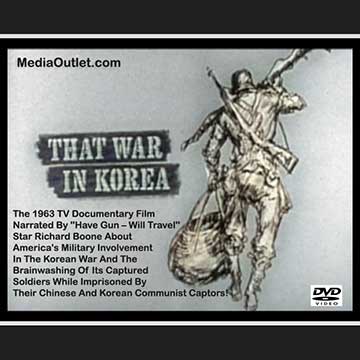
August 5, 1950: Korea: The History Of
Korea: The Aftermath Of World War II: The Cold War: The Korean
Conflict: The Cold War (1947-1953): The Cold War In Asia: The
Korean War: The Battle Of The Pusan Perimeter (Korean: Busan
Gyodubo Jeontu) (The Battle Of The Naktong River Defense Line
[Korean: Nagdong-Gang Bang-Eoseon Jeontu]): The Battle Of Taegu:
-- An offensive by North Korean divisions attempting to cross the
Nakdong River and assault the city of Taegu marks the beginning of
The Battle Of Taegu. The attack was repelled by United Nations
forces two weeks later, on August 20. The Battle Of Taegu was an
engagement between UN and North Korean forces early in the Korean
War, with fighting continuing from August 5-20, 1950 around the
city of Taegu, South Korea. It was a part of the Battle Of Pusan
Perimeter, and was one of several large engagements fought
simultaneously. The battle ended in a victory for the United
Nations after their forces were able to drive off an offensive by
North Korean divisions attempting to cross the Naktong River and
assault the city. Five North Korean Army (KPA) divisions massed
around the city preparing to cross the Naktong River and assault
it from the north and west. Defending the city were the 1st
Cavalry Division and the ROK II Corps. In a series of engagements,
each of the North Korean divisions attempted to cross the Naktong
and attack the defending forces. The success of these attacks
varied by region, but attacks in the 1st Cavalry Division sector
were repulsed and the attacks in the South Korean sector were more
successful. During the battle, however, North Korean troops were
able to surprise US troops on Hill 303 and capture them. Late in
the battle, these troops were machine gunned in the Hill 303
massacre of August 17, 1950. Despite these setbacks, the UN forces
were successful in driving most of the North Koreans off, but the
decisive battle to secure the city would occur during the Battle
of the Bowling Alley (August 12-25, 1950), a battle that took
place in a narrow valley, dubbed the "Bowling Alley",
which was north of Taegu. On Sale Until Midnight Tonight PT!
https://store.earthstation1.com/that-war-in-korea-tv-documentary-feature-film-dvd.html
Today's
EarthStation1.com 15% (Or More!) Off Commemorative Memorial Title:
The Gulf Crisis: The Road To War TV Series + Bonus 2 DVDs MP4
Download
Today, August 5, 2026
August 5, 1990: The Aftermath Of World
War II: The Cold War: The Gulf War (The Persian Gulf War, Gulf War
I): The Invasion Of Kuwait: -- Kuwaiti Emir Jaber Al-Ahmad
Al-Sabah forms the Kuwaiti Government In Exile in Ta'if, Saudi
Arabia. The day prior, Alaa Hussein Ali was appointed Prime
Minister of the Provisional Government of Free Kuwait, and Ali
Hassan al-Majid is appointed Governor of the Kuwait Governorate,
which is declared the 19th Governorate of Iraq. On August 2, 1990,
Sheikh Jaber Al-Ahmad Al-Jaber Al-Sabah and senior members of his
government fled to Saudi Arabia, where they set up a
government-in-exile in Ta'if. The Kuwaiti government in exile was
far more affluent than most other such governments, having full
disposal of the very considerable Kuwaiti assets in western banks,
of which it made use to conduct a massive propaganda campaign
denouncing the Ba'athist Iraqi occupation and mobilizing public
opinion in the western hemisphere in favor of war with Ba'athist
Iraq. In March 1991, following the defeat of Ba'athist Iraq at the
hands of coalition forces in the Persian Gulf War, the Sheikh and
his government were able to return to Kuwait. On August 3,
President of the United States George H.W. Bush announced that
U.S. Navy ships have been deployed to the Persian Gulf as part of
Operation Desert Shield, which began on August 2, 1990 as the
United States initiated a buildup of military forces to provide
for Saudi Arabia's defense. Operation Desert Shield lasted from
August 2, 1990 to January 16, 1991, when it was superceded by
Operation Desert Storm (January 17, 1991 - February 28, 1991), a
war waged by coalition forces from 35 nations led by the United
States against Iraq in order to drive them away from the Saudi
Arabian border and ultimately to eject them from Kuwait. On August
2, 1990, the Invasion Of Kuwait by Iraq began shortly after
midnight local time, when about 100,000 Iraqi troops invaded
Kuwait amid claims that Kuwait threatened Iraq's economic
existence by overproducing oil and driving prices down on the
world market. Also on August 2, 1990, United Nations Security
Council Resolution 660 was issued by he United Nations Security
Council (UNSC) condemning the Iraqi Invasion Of Kuwait and
demanding that Iraq withdraw immediately and unconditionally to
positions as they were on August 1, 1990. It was the first of
twelve resolutions on the conflict passed in 1990. On July 31,
Egypt and Saudi Arabia attempted to mediate between the two
countries with a meeting on meeting between Iraq and Kuwait in
Jeddah, Saudi Arabia. Iraq clearly stated on this occasion that it
would not use armed forces against neighboring countries. However,
at dawn on August 2, the Iraqi army that was amassed near the
border suddenly invaded Kuwait. On July 24, 1990, President of
Egypt Hosni Mubarak traveled to Baghdad to meet with Saddam
Hussein and discuss the dispute between Kuwait and Iraq, to no
avail. On July 22, 1990, Iraq began deploying troops to the
Iraqi-Kuwaiti border, creating a massive military buildup in
preparation for what would become the Iraqi Invasion Of Kuwait,
which ultimately resultd in the Gulf War (Gulf War I). Iraq
accused Kuwait onn July 15, 1990 of stealing oil from the Rumaila
oil field, an Iraqi oil field near the Iraqi-Kuwaiti border, and
threatened military action in response. In 1988 Iraq's Oil
Minister, Issam al-Chalabi, stressed a further reduction in the
crude oil production quota of Organization of the Petroleum
Exporting Countries (OPEC) members so as to end the 1980s oil
glut. Chalabi argued that higher oil prices would help Iraq
increase its revenues and pay back its 60B USD debt. However,
given its large downstream petroleum industry, Kuwait was less
concerned about the prices of crude oil and in 1989, Kuwait
requested OPEC to increase the country's total oil production
ceiling by 50% to 1.35 million bpd. Throughout much of the 1980s,
Kuwait's oil production was considerably above its mandatory OPEC
quota and this had prevented a further increase in crude oil
prices. A lack of consensus among OPEC members undermined Iraq's
efforts to end the oil glut and consequently prevented the
recovery of its war-crippled economy. According to former Iraqi
Foreign Minister Tariq Aziz, "every 1 USD drop in the price
of a barrel of oil caused a 1B USD drop in Iraq's annual revenues
triggering an acute financial crisis in Baghdad". Kuwait's
refusal to decrease its oil production was viewed by Iraq as an
act of aggression against it. The increasingly tense relations
between Iraq and Kuwait were further aggravated when Iraq alleged
that Kuwait was slant-drilling across the border into Iraq's
Rumaila field. The dispute over Rumaila field started in 1960 when
an Arab League declaration marked the Iraq-Kuwait border 2 miles
north of the southernmost tip of the Rumaila field. During the
Iran-Iraq War, Iraqi oil drilling operations in Rumaila declined
while Kuwait's operations increased. In 1989, Iraq accused Kuwait
of using "advanced drilling techniques" to exploit oil
from its share of the Rumaila field. Iraq estimated that 2.4B USD
worth of Iraqi oil was "stolen" by Kuwait and demanded
compensation. Kuwait dismissed the accusations as a false Iraqi
ploy to justify military action against it. Several foreign firms
working in the Rumaila field also dismissed Iraq's slant-drilling
claims as a "smokescreen to disguise Iraq's more ambitious
intentions". On July 25, 1990, only a few days before the
Iraqi invasion, OPEC officials said that Kuwait and the United
Arab Emirates had agreed to a proposal to limit daily oil output
to 1.5 million barrels, thus potentially settling differences over
oil policy between Kuwait and Iraq. At the time of the settlement,
more than 100,000 Iraqi troops were deployed along the Iraq-Kuwait
border, and American officials expressed little indication of
decline in tensions despite the OPEC settlement. On Sale Until
Midnight Tonight PT!
https://store.earthstation1.com/the-gulf-crisis-the-road-to-war-tv-documentary-series-dvd-mp4-us4.html
Today's
EarthStation1.com 15% (Or More!) Off Commemorative Memorial Title:
WWII Films: The Asia-Pacific War DVD, Video Download, USB Flash
Drive
Today, August 5, 2026
August 4-5, 1943: World War II: The
Pacific War (The Asia-Pacific War, The Pacific Theater Of World
War II): The Pacific Ocean Theater Of World War II: Operation
Cartwheel: The Solomon Islands Campaign: The New Georgia Campaign
(The New Georgia Islands Campaign): The Battle of Munda Point: --
United States Army forces capture Munda from the Imperial Japanese
Army, bringing an end to The Battle of Munda Point, a battle that
had been fought since July 22. The battle took place following a
landing by U.S. troops on the western coast of New Georgia from
Rendova, as part of an effort to capture the Japanese airfield
that had been constructed at Munda Point. This advance had become
bogged down and while the Allies brought forward reinforcements
and supplies, the Japanese had launched a counterattack on July
17-18 . This effort was ultimately unsuccessful and afterwards
U.S. forces launched a corps-level assault to reinvigorate their
effort to capture the airfield. Against this drive, Japanese
defenders from three infantry regiments offered stubborn
resistance, but were ultimately forced to withdraw, allowing U.S.
forces to capture the airfield on August 5. The airfield later
played an important role in supporting the Allied campaign on
Bougainville in late 1943. The airstrip on Munda had been a
Japanese base that had been used to attack American forces during
the Battle Of Guadalcanal, and was the main objective of the
assault on the island, which had been occupied by the Empire Of
Japan since the early stages of the war. The Japanese built the
airstrip, on the site of today's Munda Airport, to support their
forces fighting the Battle Of Guadalcanal. A Japanese convoy put
into Munda Point on November 24, 1942, and started construction
under careful concealment from the air by means of rows of coconut
palms suspended by cable. The airstrip was discovered by American
planes on December 3, and the first airstrikes were delivered by
B-17 Flying Fortress bombers on December 9. However, the Japanese
were able to continue to use Munda, despite regular bombardment
from both air and sea, and the Allies launched Operation Cartwheel
in order to drive the Japanese out of the Solomons and ultimately
eliminate the large Japanese base at Rabaul. The New Georgia
Campaign was launched with landings on New Georgia and nearby
islands on June 30, 1943, when mainly American but also Pacific
Islander troops conducted the Landings On Rendova and several
other amphibious operations throughout the New Georgia Group. The
Allied forces spent July 1943 conducting the Drive On Munda Point,
shelling and bombing Japanese forces in and around Munda Airfield,
fighting off a large Japanese counterattack, and eventually
closing in on Munda overland, capturing it on August 4-5 during
the Battle Of Munda Point. The heavy fighting left thousands dead
on both sides and many more wounded. New Georgia was secured by
American forces on August 23, after weeks of difficult and bloody
fighting that continued on some nearby islands until October 1943.
Donald Gilbert Kennedy was a Coastwatcher stationed at Seghe
(Segi) on New Georgia during the Solomon Islands Campaign. For his
services as a Coastwatcher, he was awarded the Distinguished
Service Order (DSO) (UK), and the Navy Cross (U.S.). Since 1978,
the island has been part of the independent state of Solomon
Islands. On Sale Until Midnight Tonight PT!
https://store.earthstation1.com/wwii-films-the-asiapacific-conflict-dvd.html
Today's
EarthStation1.com 15% (Or More!) Off Commemorative Memorial Title:
Eye Of The Dictator: Nazi Newereels Feature Documentary DVD, MP4,
USB
Today, August 5, 2026
August 5, 1936: The Olympic Games (The
Olympics): The 1936 Summer Olympics: (German: Olympische
Sommerspiele 1936)) (The Games Of The XI Olympiad (German: Spiele
Der XI. Olympiade), Berlin 1936): -- Jesse Owens wins his third of
four Olympic Gold Medals at the Berlin Olympic Games for the 200 m
sprint with a time of 20.7 seconds, defeating teammate Mack
Robinson (the older brother of Jackie Robinson). On December 4,
1935, NAACP Secretary Walter Francis White wrote a letter to Owens
about the matter, but never sent it. In it, he tryied to dissuade
Owens from taking part in the Olympics in Nazi Germany, arguing
that an African American should not promote a racist regime after
what his race had suffered at the hands of white racists in his
own country. In the months prior to the Games, a movement gained
momentum in favor of a boycott. Owens was convinced by the NAACP
to declare: "If there are minorities in Germany who are being
discriminated against, the United States should withdraw from the
1936 Olympics". Yet he and others eventually took part after
Avery Brundage, president of the American Olympic Committee
branded them "un-American agitators". In 1936, Owens and
his United States teammates sailed to the games on the SS
Manhattan. Owens arrived at the new Olympic stadium to a throng of
fans, many of them young girls yelling "Wo ist Jesse? Wo ist
Jesse?" ("Where is Jesse? Where is Jesse?"). Just
before the competitions, founder of Adidas athletic shoe company
Adi Dassler visited Owens in the Olympic village and persuaded
Owens to wear Gebruder Dassler Schuhfabrik shoes; this was the
first sponsorship for a male African American athlete. Hitler was
subsequently accused of failing to acknowledge Owens (who won gold
medals on August 3, 4 (two), and 9) or shake his hand. Owens
responded to these claims at the time: "Hitler had a certain
time to come to the stadium and a certain time to leave. It
happened he had to leave before the victory ceremony after the 100
meters [race began at 5:45 p.m.. But before he left I was on my
way to a broadcast and passed near his box. He waved at me and I
waved back. I think it was bad taste to criticize the "man of
the hour" in another country." In an article dated
August 4, 1936, the African American newspaper editor Robert L.
Vann describes witnessing Hitler "salute" Owens for
having won gold in the 100m sprint of August 3: "And then;_
wonder of wonders;_ I saw Herr Adolph Hitler, salute this lad. I
looked on with a heart which beat proudly as the lad who was
crowned king of the 100 meters event, get an ovation the like of
which I have never heard before. I saw Jesse Owens greeted by the
Grand Chancellor of this country as a brilliant sun peeped out
through the clouds. I saw a vast crowd of some 85,000 or 90,000
people stand up and cheer him to the echo." Despite these
accounts, Owens's successes at the games caused consternation for
Hitler, who was using them to show the world a resurgent Nazi
Germany. He and other government officials had hoped that German
athletes would dominate the games. Nazi minister Albert Speer
wrote that Hitler "was highly annoyed by the series of
triumphs by the marvelous colored American runner, Jesse Owens.
People whose antecedents came from the jungle were primitive,
Hitler said with a shrug; their physiques were stronger than those
of civilized whites and hence should be excluded from future
games." In 2014, Eric Brown, British fighter pilot and test
pilot, the Fleet Air Arm's most decorated living pilot, stated in
the BBC documentary "Britain's Greatest Pilot: The
Extraordinary Story Of Captain Winkle Brown": "I
actually witnessed Hitler shaking hands with Jesse Owens and
congratulating him on what he had achieved". Additionally, an
article in The Baltimore Sun in August 1936 reported that Hitler
sent Owens a commemorative inscribed cabinet photograph of
himself. Later, on October 15, 1936, Owens repeated this
allegation when he addressed an audience of African Americans at a
Republican rally in Kansas City, remarking: "Hitler didn't
snub me - it was our president who snubbed me. The president
didn't even send me a telegram." In Germany, Owens had been
allowed to travel with and stay in the same hotels as whites, at a
time when African Americans in many parts of the United States,
chiefly in the South, had to stay in segregated hotels that
accommodated only blacks. When Owens returned to the United
States, he was greeted in New York City by Mayor Fiorello
LaGuardia. During a Manhattan ticker-tape parade in his honor
along Broadway's Canyon of Heroes, someone handed Owens a paper
bag. Owens paid it little mind until the parade concluded. When he
opened it up, he found that the bag contained 10K USD in cash.
Owens's wife Ruth later said: "And he [Owens] didn't know who
was good enough to do a thing like that. And with all the
excitement around, he didn't pick it up right away. He didn't pick
it up until he got ready to get out of the car". After the
parade, Owens was not permitted to enter through the main doors of
the Waldorf Astoria New York and instead forced to travel up to
the reception honoring him in a freight elevator. President
Franklin D. Roosevelt (FDR) never invited Jesse Owens to the White
House following his triumphs at the Olympic Games. When the
Democrats bid for his support, Owens rejected those overtures: as
a staunch Republican, he endorsed Alf Landon, Roosevelt's
Republican opponent in the 1936 presidential race. Owens joined
the Republican Party after returning from Europe and was paid to
campaign for African American votes for the Republican
presidential nominee Alf Landon in the 1936 presidential election.
Speaking at a Republican rally held in Baltimore on October 9,
1936, Owens said: "Some people say Hitler snubbed me. But I
tell you, Hitler did not snub me. I am not knocking the President.
Remember, I am not a politician, but remember that the President
did not send me a message of congratulations because, people said,
he was too busy." Jesse Owens, African American track and
field athlete and four-time Olympic gold medalist in the 1936
Games (d. 1980) is born James Cleveland Owens on September 12,
1913. He specialized in the sprints and the long jump, and was
recognized in his lifetime as "perhaps the greatest and most
famous athlete in track and field history". He set three
world records and tied another, all in less than an hour at the
1935 Big Ten track meet in Ann Arbor, Michigan-a feat that has
never been equaled and has been called "the greatest 45
minutes ever in sport". He achieved international fame at the
1936 Summer Olympics in Berlin, Germany by winning four gold
medals: 100 meters, 200 meters, long jump, and 4 _ 100 meter
relay. He was the most successful athlete at the Games and, as a
black man, was credited with "single-handedly crushing
Hitler's myth of Aryan supremacy", although he "wasn't
invited to the White House to shake hands with the President,
either". The Jesse Owens Award is USA Track and Field's
highest accolade for the year's best track and field athlete.
Owens was ranked by ESPN as the sixth greatest North American
athlete of the 20th century and the highest-ranked in his sport.
In 1999, he was on the six-man short-list for the BBC's Sports
Personality of the Century. On Sale Until Midnight Tonight PT!
https://store.earthstation1.com/eye-of-the-dictator-dvd-third-reich-propaganda-films.html
Today's
EarthStation1.com 15% (Or More!) Off Commemorative Memorial Title:
The Struggles For Poland TV Series + Bonus MP4 Video Download DVD
Set
Today, August 5, 2026
August 5, 1944: The European Civil War:
World War II: The Second European War (The European Theater Of
World War II): The Eastern Front Of World War II: The Polish
Resistance Movement In World War II: Operation Tempest (Polish:
Akcja Burza, "Operation Storm"): The Warsaw Uprising:
(Polish: Powstanie Warszawskie; German: Warschauer Aufstand) (The
August Uprising [Polish: Powstanie Sierpniowe]): The Wola Massacre
(Polish: Rzez Soli, "The Wola Slaughter"): -- The
week-long Wola massacre begins, during which time at least 40,000
people in the Wola district of Poland's capital city Warsaw were
killed indiscriminately or in mass executions by German troops and
collaborationist forces during the early phase of the Warsaw
Uprising. The Wola Massacre (Polish: Rzez Woli, lit. "Wola
Slaughter") was the systematic killing of between 40,000 and
50,000 Poles in the Wola neighbourhood of the Polish capital city,
Warsaw, by the German Wehrmacht and fellow Axis collaborators in
the Azerbaijani Legion, as well as the mostly-Russian RONA forces,
which took place from August 5 to 12, 1944. The massacre was
ordered by Adolf Hitler, who directed to kill "anything that
moves" to stop the Warsaw Uprising soon after it began. Tens
of thousands of Polish civilians along with captured Home Army
resistance fighters were brutally murdered by the Germans in
organised mass executions throughout Wola. Whole families,
including babies, children and the elderly, were often shot on the
spot, but some were killed after torture and sexual assault.
Soldiers murdered patients in hospitals, killing them in their
beds, as well as the doctors and nurses caring for them. Dead
bodies were piled up to be burned by the Verbrennungskommando
("burning detachment") to destroy the evidence of the
massacre; though first, dogs were let loose to find survivors to
be killed. The operation was led by Erich Von dem Bach-Zelewski,
though its main perpetrators were the Dirlewanger Brigade and the
"RONA" Kaminski Brigade, whose forces committed the
cruelest atrocities, drawing criticism from Bach-Zelewski himself.
The Germans anticipated that these atrocities would crush the
insurrectionists' will to fight and put the uprising to a swift
end. However, the ruthless pacification of Wola only stiffened
Polish resistance, and it took until October 2 after heavy
fighting for the Germans to regain control of the city. On Sale
Until Midnight Tonight PT!
https://store.earthstation1.com/the-struggles-for-poland-dvd-set-all-9-shows-5-dis95.html
Today's
EarthStation1.com 15% (Or More!) Off Commemorative Memorial Title:
War And Peace In The Nuclear Age TV Series DVD, Download, USB
Drive
Today, August 5, 2026
August 5, 1963: The Aftermath Of World
War II: The Cold War: Arms Control: Nuclear Warfare: Nuclear
Weapons Testing: The Partial Test Ban Treaty (PTBT) (The 1963
Treaty Banning Nuclear Weapon Tests In The Atmosphere, In Outer
Space And Under Water) (The Limited Test Ban Treaty [LTBT], The
Nuclear Test Ban Treaty [NTBT], The Comprehensive Nuclear-Test-Ban
Treaty [CTBT]): -- The United States, the United Kingdom, and the
Soviet Union sign the Partial Nuclear Test Ban Treaty, the
abbreviated name of the 1963 Treaty Banning Nuclear Weapon Tests
in the Atmosphere, in Outer Space and Under Water. It prohibited
all test detonations of nuclear weapons except for those conducted
underground. It is also abbreviated as the Limited Test Ban Treaty
(LTBT) and Nuclear Test Ban Treaty (NTBT), though the latter may
also refer to the Comprehensive Nuclear-Test-Ban Treaty (CTBT),
which succeeded the PTBT for ratifying parties. Negotiations
initially focused on a comprehensive ban, but this was abandoned
due to technical questions surrounding the detection of
underground tests and Soviet concerns over the intrusiveness of
proposed verification methods. The impetus for the test ban was
provided by rising public anxiety over the magnitude of nuclear
tests, particularly tests of new thermonuclear weapons (hydrogen
bombs), and the resulting nuclear fallout. A test ban was also
seen as a means of slowing nuclear proliferation and the nuclear
arms race. Though the PTBT did not halt proliferation or the arms
race, its enactment did coincide with a substantial decline in the
concentration of radioactive particles in the atmosphere. The PTBT
was signed by the governments of the Soviet Union, United Kingdom,
and United States in Moscow on 5 August 1963 before being opened
for signature by other countries. The treaty formally went into
effect on 10 October 1963. Since then, 123 other states have
become party to the treaty. Ten states have signed but not
ratified the treaty. On Sale Until Midnight Tonight PT!
https://store.earthstation1.com/war-and-peace-in-the-nuclear-age-dvd-set-tv-series-7-disc7.html
Today's
EarthStation1.com 15% (Or More!) Off Commemorative Memorial Title:
Clive James' Fame In The 20th Century TV Series DVD Set MP4 USB
Drive
Today, August 5, 2026
August 5, 1926: Escapology: The Buried
Alive Stunt: -- Harry Houdini performs his greatest feat, spending
91 minutes underwater in a sealed tank before escaping. Houdini
performed at least three variations on a buried alive stunt during
his career. The first was near Santa Ana, California in 1915, and
it almost cost him his life. Houdini was buried, without a casket,
in a pit of earth six feet deep. He became exhausted and panicked
while trying to dig his way to the surface and called for help.
When his hand finally broke the surface, he fell unconscious and
had to be pulled from the grave by his assistants. Houdini wrote
in his diary that the escape was "very dangerous" and
that "the weight of the earth is killing". Houdini's
second variation on buried alive was an endurance test designed to
expose mystical Egyptian performer Rahman Bey, who had claimed to
use supernatural powers to remain in a sealed casket for an hour.
Houdini bettered Bey on August 5, 1926, by remaining in a sealed
casket, or coffin, submerged in the swimming pool of New York's
Hotel Shelton for one and a half hours. Houdini claimed he did not
use any trickery or supernatural powers to accomplish this feat,
just controlled breathing. He repeated the feat at the YMCA in
Worcester, Massachusetts on September 28, 1926, this time
remaining sealed for one hour and eleven minutes. Houdini's final
buried alive was an elaborate stage escape that featured in his
full evening show. Houdini would escape after being strapped in a
straitjacket, sealed in a casket, and then buried in a large tank
filled with sand. While posters advertising the escape exist
(playing off the Bey challenge by boasting "Egyptian Fakirs
Outdone!"), it is unclear whether Houdini ever performed
buried alive on stage. The stunt was to be the feature escape of
his 1927 season, but Houdini died on October 31, 1926. The bronze
casket Houdini created for buried alive was used to transport
Houdini's body from Detroit to New York following his death on
Halloween. On Sale Until Midnight Tonight PT!
https://store.earthstation1.com/clive-james39-fame-in-the-20th-century-tv-series-dvd-set-mp4-usb-39204.html
Today's
EarthStation1.com 15% (Or More!) Off Commemorative Memorial Title:
Battle Of San Pietro + Winning The War On Film WWII DVD, Download,
USB
Today, August 5, 2026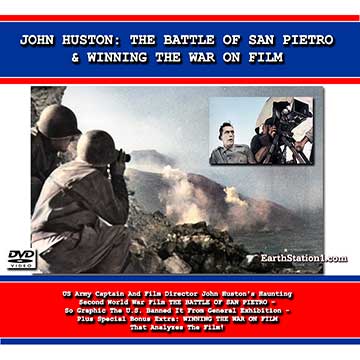
August 5, 1906: #BOTD: #HBD! John Huston,
Irish-American film director, screenwriter and actor (d. August
28, 1987) is #born John Marcellus Huston in Nevada, Missouri, a
citizen of the United States by birth who renounced his U.S.
citizenship to become an Irish citizen and resident. He returned
to reside in the United States where he died. He wrote the
screenplays for most of the 37 feature films he directed, many of
which are today considered classics: The Maltese Falcon (1941),
The Treasure of the Sierra Madre (1948), The Asphalt Jungle
(1950), The African Queen (1951), The Misfits (1961), Fat City
(1972) and The Man Who Would Be King (1975). During his 46-year
career, Huston received 15 Oscar nominations, won twice, and
directed both his father, Walter Huston, and daughter, Anjelica
Huston, to Oscar wins in different films. Huston was known to
direct with the vision of an artist, having studied and worked as
a fine art painter in Paris in his early years. He continued to
explore the visual aspects of his films throughout his career:
sketching each scene on paper beforehand, then carefully framing
his characters during the shooting. While most directors rely on
post-production editing to shape their final work, Huston instead
created his films while they were being shot, making them both
more economical and cerebral, with little editing needed. Most of
Huston's films were adaptations of important novels, often
depicting a "heroic quest," as in Moby Dick, or The Red
Badge of Courage. In many films, different groups of people, while
struggling toward a common goal, would become doomed, forming
"destructive alliances," giving the films a dramatic and
visual tension. Many of his films involved themes such as
religion, meaning, truth, freedom, psychology, colonialism and
war. Before becoming a Hollywood filmmaker, he had been an amateur
boxer, reporter, short-story writer, portrait artist in Paris, a
cavalry rider in Mexico, and a documentary filmmaker during World
War II. Huston has been referred to as "a titan", "a
rebel", and a "renaissance man" in the Hollywood
film industry. Author Ian Freer describes him as "cinema's
Ernest Hemingway"-a filmmaker who was "never afraid to
tackle tough issues head on." John Huston died in his rented
home in Middletown, Rhode Island, from pneumonia as a complication
of lung disease caused by heavy smoking, aged 81. Huston is
interred in the Hollywood Forever Cemetery in Hollywood with his
mother, Rhea. On Sale Until Midnight Tonight PT!
https://store.earthstation1.com/john-huston-wwii-films-battle-of-san-pietro-december-7th-dv7.html
Today's
EarthStation1.com 15% (Or More!) Off Commemorative Memorial Title:
You Are There Radio Historical Drama Series MP3 CD, Download, USB
Today, August 5, 2026
August 5, 1620: The Colonial History Of
The United States: The British Colonization Of The Americas: The
Plymouth Colony: The Pilgrims' Voyage On The Mayflower: -- The
Mayflower departs from Southampton, England on its first attempt
to transport would-be Pilgrim settlers to North America; when it's
fellow ship Speedwell, which had set sail on August 1, sprang a
leak shortly after, the two ships were brought to dock in
Dartmouth for repairs. They made a new start after the repairs,
and they were more than 200 miles (320 km) beyond Land's End at
the southwestern tip of England when Speedwell sprang another
leak. It was now early September, and they had no choice but to
abandon the Speedwell and make a determination on her passengers.
This was a dire event, as vital funds had wasted on the ship,
which was considered very important to the future success of their
settlement in America. Both ships then returned to Plymouth, where
twenty Speedwell Pilgrim passengers joined the now overcrowded
Mayflower, while the others returned to Holland. They waited for
seven more days until the wind picked up. Pilgrim father William
Bradford was especially worried, however: "We lie here
waiting for as fair a wind as can blow ... Our victuals will be
half eaten up, I think, before we go from the coast of England;
and, if our voyage last long, we shall not have a month's victuals
when we come in the country." According to Bradford,
Speedwell was refitted and seaworthy, having "made many
voyages ... to the great profit of her owners." He suggested
that Speedwell's master may have used "cunning and deceit"
to abort the voyage by causing the leaks, fearing starvation and
death in America. In early September, western gales turned the
North Atlantic into a dangerous place to sail. The Mayflower's
provisions were already quite low when departing Southampton, and
they became lower still by delays of more than a month. The
Pilgrim passengers had been on board the ship this entire time,
feeling worn out and in no condition for a very taxing, lengthy
Atlantic journey cooped up in the cramped spaces of a small ship.
When the Mayflower sailed from Plymouth alone on September 6,
1620, with what Bradford called "a prosperous wind", she
carried 102 passengers plus a crew of 25 to 30 officers and men,
bringing the total aboard to approximately 130. However, at about
180 tons, the Mayflower was considered a smaller cargo ship,
having traveled mainly between England and Bordeaux with clothing
and wine, not an ocean ship. Nor was it in good shape, as it was
sold for scrap four years after her Atlantic voyage. She was a
high built craft forward and aft measuring approximately 100 feet
(30 m) in length and about 25 feet (7.6 m) at her widest point.
The Pilgrims or Pilgrim Fathers were early European settlers of
the Plymouth Colony in present-day Plymouth, Massachusetts, United
States. The Pilgrims' leadership came from the religious
congregations of Brownist separatist Puritans who had fled the
volatile political environment in England for the relative calm
and tolerance of 17th-century Holland in the Netherlands. They
held Puritan Calvinist religious beliefs but, unlike other
Puritans, they maintained that their congregations needed to be
separated from the English state church. They were also concerned
that they might lose their English cultural identity if they
remained in the Netherlands, so they arranged with English
investors to establish a new colony in North America. The colony
was established in 1620 and became the second successful English
settlement in North America (after the founding of Jamestown,
Virginia in 1607). The Pilgrims' story became a central theme of
the history and culture of the United States. On Sale Until
Midnight Tonight PT!
https://store.earthstation1.com/you-are-there-historical-old-time-radio-mp3-c3.html
Today's
EarthStation1.com 15% (Or More!) Off Commemorative Memorial Title:
TV Music & Dance Shows #2 Bandstand Action DVD, Download,
Flash Drive
Today, August 5, 2026
August 5, 1957: Aesthetics: Performing
Arts: Premieres: Television Premieres: United States Television
Premieres: Music Television: Dance Television: -- American
Bandstand, a show dedicated to the teenage "baby-boomers"
by playing the songs and showing popular dances of the time,
debuts on the ABC television network. American Bandstand premiered
locally in late March 1950 as Bandstand on Philadelphia television
station WFIL-TV Channel 6 (now WPVI-TV), as a replacement for a
weekday movie that had shown predominantly British films. Hosted
by Bob Horn as a television adjunct to his radio show of the same
name on WFIL radio, Bandstand mainly featured short musical films
produced by Snader Telescriptions and Official Films, with
occasional studio guests. This incarnation was an early
predecessor of sorts of the music video shows that became popular
in the 1980s, featuring films that are themselves the ancestors of
music videos. Horn, however, was disenchanted with the program, so
he wanted to have the show changed to a dance program, with
teenagers dancing along on camera as the records played, based on
an idea that came from a radio show on WPEN, The 950 Club, hosted
by Joe Grady and Ed Hurst. This more-familiar version of Bandstand
debuted on October 7, 1952 in "Studio 'B'," which was
located in their just-completed addition to the original 1947
building in West Philadelphia (4548 Market Street), and was hosted
by Horn, with Lee Stewart as co-host until 1955. Stewart was the
owner of a TV/Radio business in Philadelphia and even though he
was an older gentleman, his advertising account was a large one
for WFIL-TV at the time and was put on the program to appease the
account. As WFIL grew financially and the account became less
important, Stewart wasn't needed and was eventually dropped from
the program. Tony Mammarella was the original producer with Ed
Yates as director. The short Snader and Official music films
continued in the short term, mainly to fill gaps as they changed
dancers during the show-a necessity, as the studio could not fit
more than 200 teenagers. On July 9, 1956, Horn was fired after a
drunk-driving arrest, as WFIL and dual owner Walter Annenberg's
The Philadelphia Inquirer at the time were doing a series on
drunken driving. He was also reportedly involved in a prostitution
ring and brought up on morals charges. Horn was temporarily
replaced by producer Tony Mammarella before the job went to Dick
Clark permanently. In late spring of 1956, the ABC television
network asked their O and O's (owned-and-operated stations) and
affiliates for programming suggestions to fill their 3:30 p.m.
(ET) time slot (WFIL had been pre-empting the ABC programming with
Bandstand). Clark decided to pitch the show to ABC president
Thomas W. Moore, and after some badgering the show was picked up
nationally, becoming American Bandstand on August 5, 1957. "Studio
'B'" measured 80' x 42' x 24', but appeared smaller due to
the number of props, television cameras, and risers that were used
for the show. It was briefly shot in color in 1958 when WFIL-TV
began experimenting with the then-new technology. Due to a
combination of factors that included the size of the studio, the
need to have as much space available for the teenagers to dance,
and the size of the color camera (owing to the technological
limitations of the day) compared to the black-and-white models, it
was only possible to have one RCA TK-41 where three RCA TK-10s had
been used before. WFIL went back to the TK-10s two weeks later
when ABC refused to carry the color signal and management realized
that the show lost something without the extra cameras. On Sale
Until Midnight Tonight PT!
https://store.earthstation1.com/classic-tv-music-amp-dance-shows-2-where-bandstand-action-is-dv2.html
Today's
EarthStation1.com 15% (Or More!) Off Commemorative Memorial Title:
TV Music & Dance Shows #15 Ready Steady Go Vol II DVD MP4
Flash Drive
Today, August 5, 2026
August 5, 1942: #BOTD: #HBD! Rick Huxley,
English bassist for the Dave Clark Five, a group that was part of
the British Invasion. (d. February 11, 2013) is #born at
Livingstone Hospital, Dartford, Kent. He joined the Dave Clark
Five in 1958, and played on all of the band's hits including "Glad
All Over" and "Bits and Pieces". He was the only
member of the group who did not write songs. After the group
disbanded in 1970, Huxley pursued a career in property development
but maintained an involvement in the music business. He was in
attendance for the ceremonial induction of the group into the Rock
and Roll Hall of Fame in March 2008, along with Lenny Davidson and
Dave Clark. Rick Huxley died in Old Harlow, Essex, England at the
age of 72, after suffering from emphysema for some years. His
burial details are not publicly disclosed. On Sale Until Midnight
Tonight PT!
https://store.earthstation1.com/classic-tv-music-amp-dance-shows-15-ready-steady-go-ii-d15.html
Today's
EarthStation1.com 15% (Or More!) Off Commemorative Memorial Title:
The Golden Age Of Rock 'N' Roll DVD, MP4 Video Download, Flash
Drive
Today, August 5, 2026
August 5, 1947: #BOTD: #HBD! Rick
Derringer, American singer-songwriter, guitarist and producer,
most famous as the singer of "Hang On Sloopy" (May 26,
2025) is #born Richard Dean Zehringer in Celina, Ohio. He came to
prominence in the 1960s as a member of the McCoys, when he was
brought in to record lead vocals for the number-one hit single
with "Hang On Sloopy", regarded as a classic track from
the garage rock era. The McCoys had seven songs chart in the top
100, including covers of "Fever" and "Come On,
Let's Go". After releasing All American Boy, Derringer
established a career as a solo artist. In 1973, Derringer found
further success with his song "Rock and Roll, Hoochie Koo".
He worked extensively with brothers Edgar and Johnny Winter,
playing lead and rhythm guitar in their bands and producing all of
their gold and platinum records, including Edgar Winter's hits
"Frankenstein" and "Free Ride" (both in 1973).
He collaborated with Steely Dan, Cyndi Lauper, and "Weird Al"
Yankovic, producing Yankovic's Grammy Award-winning songs "Eat
It" (1984) and "Fat" (1988). He produced the World
Wrestling Federation's album The Wrestling Album (1985) and its
follow-up, Piledriver: The Wrestling Album II (1987). Those albums
featured Hulk Hogan's entrance song, "Real American,"
initially the theme song of the tag team U.S. Express; and the
Demolition tag team's theme, "Demolition." Derringer
produced three songs on the soundtrack of the 1984 Tom Hanks film
Bachelor Party. Derringer married Liz Agriss in 1969, a writer
whom he met when she was working for Andy Warhol. The marriage
ended in divorce. He married secondly Dyan Buckelew and they had
one daughter. The marriage also ended in divorce. His third wife
was Jenda. In 2017, Derringer appeared on Alex Jones's Infowars
several times. In one of those appearances, political consultant
Roger Stone interviewed him about his support for Donald Trump.
Derringer died in Ormond Beach, Florida on May 26, 2025, at the
age of 77. According to TMZ, Derringer's wife, Jenda Derringer,
said he "died peacefully after being taken off life support
Monday night following a medical episode". His caretaker and
close friend, Tony Wilson, said Derringer had undergone a triple
bypass two months earlier but had been doing well. His remains
were cremated; the final disposition of his ashes are not publicly
disclosed. On Sale Until Midnight Tonight PT!
https://store.earthstation1.com/the-golden-age-of-rock-39n39-roll-dvd-complete-tv-series-5-39395.html
Today's
EarthStation1.com 15% (Or More!) Off Commemorative Memorial Title:
Statue Of Liberty Films Collection DVD, Video Download, USB Drive
Today, August 5, 2026
August 5, 1884: National
Personifications: National Personifications Of The United States:
National Monuments: National Monuments Of The United States: The
Statue Of Liberty (Liberty Enlightening The World) (French: La
Liberte Eclairant Le Monde): -- The cornerstone for the Statue Of
Liberty is laid on Bedloe's Island (now Liberty Island) in New
York Harbor. On Sale Until Midnight Tonight PT!
https://store.earthstation1.com/statue-of-liberty-dvd-historical-films.html
Today's
EarthStation1.com 15% (Or More!) Off Commemorative Memorial Title:
The Birth Of Europe: Ice Age To 20th Century DVD, Video Download,
USB
Today, August 5, 2026
August 5, 1888: The Automobile: The
History Of The Automobile: Driving: Roadtrips (Road Trips): The
History Of Roadtrips: Bertha Benz's Mannheim To Pforzheim Roadtrip
(The Bertha Benz Memorial Route): -- The beautiful and brilliant
Bertha Benz becomes the first person in history to drive an
automobile over a long distance when she drives the Benz
Patent-Motorwagen Number 3 of 1886, a three-wheeled automobile, a
distance of about 104 km (65 miles) from Mannheim to Pforzheim and
back again in the world's first long distance automobile trip, a
journey commemorated as the Bertha Benz Memorial Route since 2008.
Born Bertha Ringer in Pforzheim, Grand Duchy of Baden, German
Confederation (May 3, 1849 - May 5, 1944), she was a German
automotive pioneer and the business partner and wife of automobile
inventor Karl Benz. As a result of the publicity of her
long-distance drive, she brought the Benz Patent-Motorwagen
worldwide attention and got the company its first sales. Bertha
Ringer was born in 1849 to a wealthy family in Pforzheim, Grand
Duchy of Baden. Two years before her marriage to Karl Benz, she
used part of her dowry to invest in his failing iron construction
company. As an unmarried woman, she was able to do so; after she
married Benz, according to German law, Bertha lost her legal power
to act as an investor. On July 20, 1872, Bertha Ringer married
Karl Benz. As he moved on to a new manufacturing venture, Benz and
Cie, he continued to use her dowry as financial support. He
finished his work on his first horseless carriage in December
1885. Although Bertha financed the development process, and would
hold patent rights under modern law, as a married woman she was
not allowed to apply for the patent. Together they had five
children: Eugen (born 1873), Richard (1874), Clara (1877), Thilde
(1882), and Ellen (1890). In 1886, Benz presented the Patent
Motorwagen automobile to the world. Within the decade, 25 vehicles
had been built. With cutting-edge bicycle constructions, the Model
I was the original Patent Motor Car and the world's first
automobile. When 39-year-old Bertha Benz drove from Mannheim to
Pforzheim with her sons Richard and Eugen, thirteen and fifteen
years old respectively, in a Model III, she went without telling
her husband and without permission of the authorities, thus
becoming the first person to drive an automobile over a real
distance, and the first to do so illegally. Before this historic
trip, motorized drives were merely very short trial drives,
returning to the point of origin, made with mechanical assistants.
Following wagon tracks, this pioneering tour had a one-way
distance of about 106 km (66 mi). Although the ostensible purpose
of the trip was to visit her mother, Bertha Benz had other
motives: to prove to her husband-who had failed to consider
marketing his invention adequately-that the automobile in which
they both had heavily invested would become a financial success
once it was shown to be useful to the general public; and to give
her husband the confidence that his constructions had a future.
She left Mannheim around dawn, solving numerous problems along the
way. Bertha demonstrated her significant technical capabilities on
this journey. With no fuel tank and only a 4.5-litre supply of
petrol in the carburetor, she had to find ligroin, the petroleum
solvent needed for the car to run. It was only available at
apothecary shops, so she stopped in Wiesloch at the city pharmacy
to purchase the fuel. At the time petrol and other fuels could
only be bought from chemists (drug stores in American English) and
so this is how the chemist in Wiesloch became the first fuel
station in the world. She cleaned a blocked fuel line with her hat
pin and used her garter as isolation material. A blacksmith had to
help mend a chain at one point. When the wooden brakes began to
fail Benz visited a cobbler to install leather, making the world's
first pair of brake pads. An evaporative cooling system was
employed to cool the engine, making water supply a big worry along
the trip. The trio added water to their supply every time they
stopped. The car's two gears were not enough to surmount uphill
inclines and Eugen and Richard often had to push the vehicle up
steep roads. Benz reached Pforzheim somewhat after dusk, notifying
her husband of her successful journey by telegram. She drove back
to Mannheim several days later. The novel trip received a great
deal of publicity, as she had sought. The drive was a key event in
the technical development of the automobile. The pioneering couple
introduced several improvements after Bertha's experiences. She
reported everything that had happened along the way and made
important suggestions, such as the introduction of an additional
gear for climbing hills and brake linings to improve brake-power.
Her trip proved to the burgeoning automotive industry that test
drives were essential to their business. On Sale Until Midnight
Tonight PT!
https://store.earthstation1.com/the-birth-of-europe-european-history-from-the-ice-age-to-20th-centu20.html
Today's
EarthStation1.com 15% (Or More!) Off Commemorative Memorial Title:
The Idolmaker (1980) DVD, MP4 Video Download, USB Flash Drive
Today, August 5, 2026
August 5, 1956: #BOTD: #HBD! Maureen
McCormick, American actress, singer, author, sex symbol and
beauty, is #born Maureen Denise McCormick in the Encino section of
Los Angeles, California. She portrayed Marcia Brady on the ABC
television sitcom The Brady Bunch, which ran from 1969 to 1974 and
reprised the role in several of the numerous Brady Bunch spin-offs
and films, including The Brady Kids, The Brady Bunch Hour, The
Brady Brides and A Very Brady Christmas (1988). McCormick also
appeared in The Idolmaker (1980) as well as a wide range of other
supporting film roles. In the 1980s and 1990s, she ventured into
stage acting, appearing in a variety of different roles and
productions such as Wendy Darling in Peter Pan and Betty Rizzo in
Grease. McCormick also had a brief career as a recording artist,
releasing four studio albums with the Brady Bunch cast as well as
touring with them. Her only release as a solo artist to date is a
country music album, When You Get a Little Lonely (1995). Despite
professional success on The Brady Bunch and its spin-offs,
McCormick struggled largely in her personal life in the years
following the original series' end. Addictions to cocaine and
quaaludes, as well as bouts of depression and bulimia, all
contributed to McCormick losing her reputation for reliability as
an actress. Since the 2000s, she has appeared on several reality
television series such as VH1's Celebrity Fit Club, CMT's Gone
Country (which led to a short-lived spin-off series led by
McCormick, Outsiders Inn) and the Australian version of I'm a
Celebrity... Get Me Out of Here!, as well as guest spots on a wide
range of television series. In 2008, McCormick published an
autobiography, Here's the Story: Surviving Marcia Brady and
Finding My True Voice, which debuted at number four on The New
York Times bestseller list and garnered significant publicity and
mild controversy. On Sale Until Midnight Tonight PT!
https://store.earthstation1.com/the-idolmaker-bob-marcucci-biography-dvd.html
Today's
EarthStation1.com 15% (Or More!) Off Commemorative Memorial Title:
Television: A History Of Broadcast TV DVD MP4 Download USB Drive
Today, August 5, 2026
August 5, 1945: #BOTD: #HBD! Loni
Anderson, American actress, sex symbol and beauty, best known for
playing the sexy and smart receptionist Jennifer Marlowe on the
CBS sitcom WKRP in Cincinnati (1978-1982), which earned her
nominations for three Golden Globe Awards and two Emmy Awards (d.
August 3, 2025) is #born Loni Kaye Anderson in Saint Paul,
Minnesota, the daughter of Klaydon Carl "Andy" Anderson,
an environmental chemist, and Maxine Hazel (nee Kallin), a former
model. She grew up in suburban Roseville, Minnesota. As a senior
at Alexander Ramsey Senior High School, she was voted Queen of the
Valentine's Day Winter Formal of 1963. As she states in her
autobiography My Life in High Heels, her father was going to name
her Leilani, but realized that when she got to her teen years, it
was likely to be twisted into "'Lay'" Lani", so it
was changed to simply Loni. Her acting debut came with a bit part
in the film Nevada Smith (1966), starring Steve McQueen. After
that, she was mostly unemployed as an actress for nearly a decade,
then she received guest roles on television series in the
mid-1970s. She appeared in two episodes of S.W.A.T., then on the
sitcom Phyllis, and on the detective series Police Woman and Harry
O. She auditioned for the role of Chrissy on the sitcom Three's
Company. She did not win the role, but in 1978 guest-starred as
Susan Walters on a Season Two episode. Anderson's most famous
acting role came as the sultry receptionist Jennifer Marlowe on
the sitcom WKRP in Cincinnati (1978-1982). She was offered the
role when producers saw a poster of her in a red swimsuit-a pose
similar to Farrah Fawcett's famous 1976 poster. Hugh Wilson, the
sitcom's creator, later said Anderson got the role because her
body resembled Jayne Mansfield's and because she possessed the
innocent sexuality of Marilyn Monroe. For her role, she was
nominated for three Golden Globe Awards and two Emmy Awards.
Although the series suffered in the Nielsen ratings throughout
most of its four-year run, it had a strong following among teens,
young adults, and disc jockeys. Owing to her rising popularity as
the series' so-called "main attraction", Anderson walked
out on the sitcom during the 1980 summer hiatus, requesting a
substantial salary increase. While she was renegotiating her
contract, she starred in the television film The Jayne Mansfield
Story (1980). When the network agreed to her requests, she
returned to the series and remained until its cancellation in
1982. Aside from her acting career, Anderson became known for her
colorful personal life, particularly her relationship with and
marriage to actor Burt Reynolds. They starred in the comedy film
Stroker Ace (1983), which was a critical and box-office failure.
She later appeared as herself in the romantic comedy The Lonely
Guy (1984), starring Steve Martin. She voiced Flo, a collie in the
animated film All Dogs Go to Heaven (1989). In the mid-to-late
1980s, Anderson was teamed with Wonder Woman actress Lynda Carter
in the television series Partners in Crime (1984), and starred in
short-lived comedy series Easy Street (1986-1987). She appeared in
television adaptations of classic Hollywood films, such as A
Letter to Three Wives (1985) with Michele Lee, and Sorry, Wrong
Number (1989), both of which received little attention. After
starring in Coins in the Fountain (1990), Anderson received
considerable praise for her portrayal of comedian actress Thelma
Todd in the television movie White Hot: The Mysterious Murder of
Thelma Todd (1991). In the early 1990s, she attempted to co-star
with her husband Burt Reynolds on his sitcom Evening Shade, but
the network was not fond of the idea, thus replacing Anderson with
Marilu Henner. After Delta Burke was fired from the sitcom
Designing Women in 1991, producers offered Anderson a role as
Burke's replacement, which never came to pass because the network
refused to pay Anderson the salary she had requested. She agreed
to return as Jennifer Marlowe on two episodes of The New WKRP in
Cincinnati, a sequel to the original series. In 1993, Anderson was
added to the third season of the sitcom Nurses, playing hospital
administrator Casey MacAffee. Although her entry was an attempt to
boost ratings, the series was canceled shortly thereafter. Growing
up with parents who both smoked, Anderson witnessed the effects of
chronic obstructive pulmonary disease (COPD), a lung disease often
caused by smoking. In 1999, she became a spokesperson for a COPD
support organization named COPD Together. In April 2018, Anderson
was seen promoting WKRP in Cincinnati and other television series
on the MeTV television network. Though less frequent since the
start of the 21st century, Anderson continued to act in television
series, and played a lead role in the 2016-2020 web series My
Sister is So Gay. On October 3, 2023, it was announced that
Anderson would feature in the Lifetime film Ladies of the '80s: A
Divas Christmas. According to the official synopsis, the movie
follows five soap opera divas readying for a reunion show who take
on playing cupid during Christmas to bring together their director
and producer as they all learn the meaning of the true Christmas
spirit. The ensemble cast was made up of Anderson, Linda Gray,
Morgan Fairchild, Donna Mills, and Nicollette Sheridan. Anderson
was married four times: to real estate developer Bruce Hasselberg
(1964-1966), actor Ross Bickell (1974-1981), actor Burt Reynolds
(1988-1994), and musician Bob Flick (2008-), one of the founding
members of the folk band The Brothers Four. They originally met at
a movie premiere in Minneapolis in 1963. She had an acknowledged
affair with her co-star Gary Sandy near the end of her marriage
with Bickell. Anderson had two children: a daughter, Deidra
(fathered by Hasselberg), and a son, Quinton, adopted with
Reynolds. She also had a sister, Andrea. Anderson's autobiography
My Life in High Heels was published in 1995. She had 4
grandchildren from her two children. Anderson died in a Los
Angeles, California hospital on a Sunday at the age of 79, two
days shy of her 80th birthday, of what her longtime publicist,
Cheryl J. Kagan stated was "an acute prolonged illness."
Anderson is survived by Flick, her daughter Deidra and son-in law
Charlie Hoffman, son Quinton Anderson Reynolds ("the best
decision that we ever made in our entire relationship"),
grandchildren McKenzie and Megan Hoffman, stepson Adam Flick and
wife Helene, and step-grandchildren Felix and Maximilian. After a
private family service, she was buried at the Hollywood Forever
Cemetery in Hollywood, Los Angeles, California. On Sale Until
Midnight Tonight PT!
https://store.earthstation1.com/television-1988-tv-documentary-series-8-shows-4-dual-laye198884.html
Today's
EarthStation1.com 15% (Or More!) Off Commemorative Memorial Title:
Women Of Courage: The WASP Aviators Of WWII DVD MP4 Download USB
Drive
Today, August 5, 2026
August 5, 1943: The European Civil War:
World War II: The Second European War (The European Theater Of
World War II): Aviation: Military Aviation: Air Warfare Of World
War II: Women Airforce Service Pilots (Women's Army Service
Pilots, Women's Auxiliary Service Pilots, WASPs): -- The Women
Airforce Service Pilots (WASP), also known as the Women's Army
Service Pilots or Women's Auxiliary Service Pilots, is formed, a
civilian women pilots' organization whose members were United
States federal civil service employees. Members of WASP became
trained pilots who tested aircraft, ferried aircraft, and trained
other pilots. Their purpose was to free male pilots for combat
roles during World War II. Despite various members of the armed
forces being involved in the creation of the program, the WASP and
its members had no military standing. WASP was preceded by the
Women's Flying Training Detachment (WFTD) and the Women's
Auxiliary Ferrying Squadron (WAFS). Both were organized separately
in September 1942. They were pioneering organizations of civilian
women pilots, who were attached to the United States Army Air
Forces to fly military aircraft during World War II. On August 5,
1943, the WFTD and WAFS merged to create the WASP organization.
The WASP arrangement with the US Army Air Forces ended on December
20, 1944. During its period of operation, each member's service
had freed a male pilot for military combat or other duties. They
flew over 60 million miles; transported every type of military
aircraft; towed targets for live anti-aircraft gun practice;
simulated strafing missions and transported cargo. Thirty-eight
WASP members lost their lives and one disappeared while on a ferry
mission, her fate still unknown. In 1977, for their World War II
service, the members were granted veteran status, and in 2009
awarded the Congressional Gold Medal. On Sale Until Midnight
Tonight PT!
https://store.earthstation1.com/women-of-courage-the-wasp-aviators-of-wwii-dvd-mp4-download-usb-driv5.html
Today's
EarthStation1.com #OnThisDay Commemorative Memorial Title: T.R.:
The Life Of Theodore Roosevelt DVD, Video Download, USB Drive
Today, August 5, 2026 August 5: National Oyster Day: -- Honors
a very special mollusk, the oyster, enjoyed as seafood in many
parts of the world, this fine delicacy needs no introduction, but
someone certainly thought it could use a celebration. Boil it, eat
it fresh, put it in soup - there are many delicious ways to feast
on oysters and just as many ways to enjoy this particular day.
Oysters have been around for a long long time, and scientists
believe they were one of the Earth's first living inhabitants. In
fact, they have found fossils of oysters that date back to when
the dinosaurs walked the earth. Not only have these little jewels
been around for ages, but they have also been a source of food for
just as long. Early humans preferred tossing oysters into the fire
rather than prying them open with tools or stone, data shows.
Archaeologists have also found evidence that proves people from
the coastal regions consumed oysters regularly - fossilized oyster
shells from various periods prove this without a doubt. Oysters
were important to many civilizations. The Greeks loved them so
much that they began to cultivate oysters. They were the very
first civilization in the world to do so. Fishermen would scatter
pieces of broken pottery in places where oysters grew to encourage
baby oysters to attach themselves to the pieces. They would then
transport these pieces, baby oysters in tow, to other places.
These guys even found a use for oyster shells, using them to cast
ballots during voting time. Greek myths also began to feature the
oyster - the famous Greek goddess of Beauty and Love, Aphrodite,
is said to have been born from the sea in an oyster. After Greek
civilization declined, the Romans took up the mantle, continuing
to hold oysters in high regard. They became part of the rich
Roman's meals and also appeared in Roman mythology. The Romans'
love for the oyster led to overharvesting, however, causing a
scarcity. They attempted harvesting and transplanting them, but
nothing stuck. By the time the world entered the 8th century, this
rich man's food was now considered a common delicacy. Between the
18th and 19th centuries, the world entered a period called the
Golden Age of Oysters. Even the famous satirist, essayist, poet,
and author Jonathan Swift was a fan. There was a massive surge in
oyster production, making it cheaper to procure. This led to the
oyster being featured in dining rooms across the U.S. and Europe.
In the 19th century, New York gained the title of the world's
biggest producer of oysters. The New York Harbor apparently held
half the world's oysters before it was destroyed by overharvesting
and pollution. History also documents how oysters are the reason
behind New York building its restaurant trade. Oysters were such
an integral part of this city's economy that they even used the
shells to pave roads and create cement, amongst other items. Apart
from New York, multiple other states like Baltimore, New Orleans,
and Philadelphia supplied oysters. They were in such abundance
that oyster saloons - now called oyster houses - popped up
everywhere. These were the precursor to today's oyster raw bars.
With the railroad came a way to transport oysters quickly, and
this opened up new markets for this delicacy. Two other major
developments also spurred the oyster trade - canning and
refrigeration. Unfortunately, in a repeat of history, this rising
demand led to overharvesting once again, and New York's oyster
beds went into decline. While the state did try to introduce
foreign oyster species - and was moderately successful, this also
brought disease, which destroyed most of the beds by the 1900s.
The reduced production and increased popularity hiked prices, and
the common meal became a rare delicacy once again, where it
remains to this day. While we do not know the origins of this day,
we know it is celebrated mostly in the U.S. and the U.K.
https://store.earthstation1.com/tr-the-life-of-theodore-roosevelt-dvd-2-disc-se2.html
August 5: National Oyster Day: -- Honors
a very special mollusk, the oyster, enjoyed as seafood in many
parts of the world, this fine delicacy needs no introduction, but
someone certainly thought it could use a celebration. Boil it, eat
it fresh, put it in soup - there are many delicious ways to feast
on oysters and just as many ways to enjoy this particular day.
Oysters have been around for a long long time, and scientists
believe they were one of the Earth's first living inhabitants. In
fact, they have found fossils of oysters that date back to when
the dinosaurs walked the earth. Not only have these little jewels
been around for ages, but they have also been a source of food for
just as long. Early humans preferred tossing oysters into the fire
rather than prying them open with tools or stone, data shows.
Archaeologists have also found evidence that proves people from
the coastal regions consumed oysters regularly - fossilized oyster
shells from various periods prove this without a doubt. Oysters
were important to many civilizations. The Greeks loved them so
much that they began to cultivate oysters. They were the very
first civilization in the world to do so. Fishermen would scatter
pieces of broken pottery in places where oysters grew to encourage
baby oysters to attach themselves to the pieces. They would then
transport these pieces, baby oysters in tow, to other places.
These guys even found a use for oyster shells, using them to cast
ballots during voting time. Greek myths also began to feature the
oyster - the famous Greek goddess of Beauty and Love, Aphrodite,
is said to have been born from the sea in an oyster. After Greek
civilization declined, the Romans took up the mantle, continuing
to hold oysters in high regard. They became part of the rich
Roman's meals and also appeared in Roman mythology. The Romans'
love for the oyster led to overharvesting, however, causing a
scarcity. They attempted harvesting and transplanting them, but
nothing stuck. By the time the world entered the 8th century, this
rich man's food was now considered a common delicacy. Between the
18th and 19th centuries, the world entered a period called the
Golden Age of Oysters. Even the famous satirist, essayist, poet,
and author Jonathan Swift was a fan. There was a massive surge in
oyster production, making it cheaper to procure. This led to the
oyster being featured in dining rooms across the U.S. and Europe.
In the 19th century, New York gained the title of the world's
biggest producer of oysters. The New York Harbor apparently held
half the world's oysters before it was destroyed by overharvesting
and pollution. History also documents how oysters are the reason
behind New York building its restaurant trade. Oysters were such
an integral part of this city's economy that they even used the
shells to pave roads and create cement, amongst other items. Apart
from New York, multiple other states like Baltimore, New Orleans,
and Philadelphia supplied oysters. They were in such abundance
that oyster saloons - now called oyster houses - popped up
everywhere. These were the precursor to today's oyster raw bars.
With the railroad came a way to transport oysters quickly, and
this opened up new markets for this delicacy. Two other major
developments also spurred the oyster trade - canning and
refrigeration. Unfortunately, in a repeat of history, this rising
demand led to overharvesting once again, and New York's oyster
beds went into decline. While the state did try to introduce
foreign oyster species - and was moderately successful, this also
brought disease, which destroyed most of the beds by the 1900s.
The reduced production and increased popularity hiked prices, and
the common meal became a rare delicacy once again, where it
remains to this day. While we do not know the origins of this day,
we know it is celebrated mostly in the U.S. and the U.K.
https://store.earthstation1.com/tr-the-life-of-theodore-roosevelt-dvd-2-disc-se2.html
Today's
EarthStation1.com #OnThisDay Commemorative Memorial Title: The
Western Tradition TV Series DVD, MP4 Video Download, USB Drive
Today, August 5, 2026August 5, 1895: #DOTD: Friedrich Engels,
German socialist, philosopher, social scientist, journalist and
businessman, co-founder together with Karl Marx of Marxism or
Marxist Theory, a method of socioeconomic analysis that uses an
interpretation of historical development known as dialectical
materialism, also known as historical materialism, a materialist
theory to understand class relations and social conflict, author
of The Condition Of The Working Class in England in 1845 based on
personal observations and research in Manchester, England,
co-author of The Communist Manifesto along with Marx in 1848,
author and co-author (primarily with Marx) of many other works,
who later supported Marx financially to do research and write Das
Kapital (German: Das Kapital. Kritik Der Politischen Okonomie
[Capital: A Critique Of Political Economy]), is the most
significant work by Karl Marx and the cornerstone of Marxian
economics, published in three volumes in 1867, 1885, and 1894, the
second and third volumes of which Engels edited after Marx's
death, organiser of Marx's notes on The Theories Of Surplus Value,
which he later published as the "fourth volume" of
Capital (b. November 28, 1820) #dies at 41 Regent's Park Road,
Primrose Hill, NW1, London, England of throat cancer, aged 74.
Following cremation at Woking Crematorium, his ashes were
scattered off Beachy Head, near Eastbourne, a chalk headland in
East Sussex, England, situated close to Eastbourne, immediately
east of the Seven Sisters, a series of white chalk sea cliffs on
the English Channel coast (similar to but not to be confused with
The White Cliffs Of Dover), as he had requested. He left a
considerable estate to Eduard Bernstein and Louise Freyberger
(wife of Ludwig Freyberger), valued for probate at 25,265 0s. 11d
PS, equivalent to 3,686,193 PS in 2023. Friedrich Engels was born
in Barmen, Wuppertal, , Kingdom Of Prussia (Germany), the son of a
wealthy textile manufacturer. Despite his bourgeois background, he
became a staunch critic of capitalism, influenced by his
observations of industrial working conditions in Manchester,
England, as published in The Condition Of The Working Class In
England. He met Marx in 1844, after which they jointly authored
works including The Holy Family (1844), The German Ideology
(written 1846), and The Communist Manifesto (1848), and worked as
political activists in the Communist League and First
International. Engels' own works, including Anti-Duhring (1878),
Socialism: Utopian And Scientific (1880), Dialectics Of Nature
(written 1872-1882), The Origin Of The Family, Private Property
And The State (1884), and Ludwig Feuerbach And The End of
Classical German Philosophy (1886), are foundational to Marxist
theory. Engels's interests included poetry, fox hunting and
hosting regular Sunday parties for London's left-wing
intelligentsia where, as one regular put it, "no one left
before two or three in the morning". His stated personal
motto was "take it easy" while "jollity" was
listed as his favourite virtue. Of Engels's personality and
appearance, Robert Heilbroner described him in The Worldly
Philosophers as "tall and rather elegant, he had the figure
of a man who liked to fence and to ride to hounds and who had once
swum the Weser River four times without a break" as well as
having been "gifted with a quick wit and facile mind"
and of a gay temperament, being able to "stutter in twenty
languages". He had a great enjoyment of wine and other
"bourgeois pleasures". Engels favoured forming romantic
relationships with women of the proletariat and found a long-term
partner in a working-class woman named Mary Burns, although they
never married. After her death, Engels was romantically involved
with her younger sister Lydia Burns. Historian and former Labour
MP Tristram Hunt, author of The Frock-Coated Communist: The
Revolutionary Life of Friedrich Engels, argues that Engels "almost
certainly was, in other words, the kind of man Stalin would have
had shot". Hunt sums up the disconnect between Engels's
personality and the Soviet Union which later utilised his works,
stating "This great lover of the good life, passionate
advocate of individuality, and enthusiastic believer in
literature, culture, art and music as an open forum could never
have acceded to the Soviet Communism of the 20th century, all the
Stalinist claims of his paternity notwithstanding." As to the
religious persuasion attributable to Engels, Hunt writes "In
that sense the latent rationality of Christianity comes to
permeate the everyday experience of the modern world -- its values
are now variously incarnated in the family, civil society, and the
state. What Engels particularly embraced in all of this was an
idea of modern pantheism, or, rather, pandeism, a merging of
divinity with progressing humanity, a happy dialectical synthesis
that freed him from the fixed oppositions of the pietist ethos of
devout longing and estrangement. 'Through Strauss I have now
entered on the straight road to Hegelianism... The Hegelian idea
of God has already become mine, and thus I am joining the ranks of
the "modern pantheists"'". Engels was a polyglot
and was able to write and speak in numerous languages, including
Russian, Italian, Portuguese, Irish, Spanish, Polish, French,
English, German and the Milanese dialect. #FriedrichEngels
#Socialism #Communism #PoliticalPhilosophy #Philosophy #Authors
#DasKapital #CommunistManifesto #MP4 #VideoDownload #DVD
https://store.earthstation1.com/the-western-tradition-dvd-set-all-52-shows-13-d5213.html
Today's
EarthStation1.com #OnThisDay Commemorative Memorial Title: Philip
Sheridan And The American Indian Wars MP4 Video Download DVD
Today, August 5, 2026August 5, 1888: #DOTD: Philip Sheridan,
career United States Army officer, Union general in the American
Civil War, and United States general during The Indian Wars (b.
March 6, 1831) #dies of heart failure in his summer cottage in the
Nonquitt enclave of Dartmouth, Massachusetts, aged 57. In 1888
Sheridan suffered a series of massive heart attacks two months
after sending his memoirs to his publisher. After his first heart
attack, the U.S. Congress during the term of President Grover
Cleveland quickly passed legislation to promote him to General Of
The Army on June 1, 1888, and he received the news from a
congressional delegation with joy, despite his pain. His body was
returned to Washington, which his family moved him from to avoid
the heat of Washington, and he was buried on a hillside facing the
capital city near Arlington House in Arlington National Cemetery.
The sculpture on the marker was executed by English sculptor
Samuel James Kitson. The burial helped elevate Arlington to
national prominence. His wife Irene never remarried, saying, "I
would rather be the widow of Phil Sheridan than the wife of any
man living." Philip Sheridan was born Philip Henry Sheridan
in Albany, New York, the third child of six of John and Mary
Meenagh Sheridan, Irish Catholic immigrants from the parish of
Killinkere in County Cavan, Ireland; there has been long-time
speculation that he may have been born at sea on the ship his
parents emigrated to the United States aboard. His career was
noted for his rapid rise to major general and his close
association with General-in-chief Ulysses S. Grant, who
transferred Sheridan from command of an infantry division in the
Western Theater to lead the Cavalry Corps of The Army Of The
Potomac in the East. In 1864, he defeated Confederate forces under
General Jubal Early in the Shenandoah Valley and his destruction
of the economic infrastructure of the Valley, called "The
Burning" by residents, was one of the first uses of
scorched-earth tactics in the war. In 1865, his cavalry pursued
Gen. Robert E. Lee and was instrumental in forcing his surrender
at Appomattox Courthouse. Sheridan waged total war on the Native
American inhabitants of The United States during The Indian Wars
of the Great Plains. He was also instrumental in the development
and protection of Yellowstone National Park, both as a soldier and
a private citizen. In 1883, Sheridan was appointed
General-In-Chief Of The U.S. Army.
https://store.earthstation1.com/philip-sheridan-and-the-american-indian-wars-mp4-video-download-dvd.html
Today's
EarthStation1.com #OnThisDay Commemorative Memorial Title: The
Open Mind With Bill Jenkins Radio Series DVD, MP3 Download, USB
Today, August 5, 2026August 5, 1971: #DOTD: #RIP: Royal Rife,
American biologist, inventor, instrument maker and early exponent
of high-magnification time-lapse microscopy, reputed by the New
York Times and other newspapers of record to have discovered and
employed a cure for cancer (b. May 16, 1888) #dies in El Cajon,
California of a heart attack at the age of 83. An obituary in the
Daily Californian stated that he died penniless and embittered by
the failure of his devices to garner scientific acceptance. He is
buried at Mount Hope Cemetery in San Diego, California. Royal Rife
was born Royal Raymond Rife in Elkhorn, Nebraska. He is known for
his microscopes, which he claimed could observe live
microorganisms with a magnification considered impossible for his
time, and for an "oscillating beam ray" invention, which
produced impulses of electromagnetic frequencies he used to
disable cancerous cells and other microorganisms responsible for
various ailments by "devitalizing disease organisms"
through vibration. (Radionics, also called electromagnetic therapy
(EMT) and the Abrams Method, -is a form of alternative medicine by
which disease can be diagnosed and treated by applying
electromagnetic radiation (EMR), such as radio waves, to the body
from an electrically powered device.) Although he came to
collaborate with scientists, doctors and inventors of the epoch,
and his findings were published in newspapers and scientific
journals like the Smithsonian Institution annual report of 1944,
they were later rejected by the American Medical Association
(AMA), the American Cancer Society (ACS) and mainstream science.
In the 1930s, he made several optical compound microscopes and,
using a movie camera, took time-lapse microscopy movies of
microbes. He also built microscopes that included polarizers to
polarize the light. Rife also reported that a 'beam ray' device of
his invention could destroy microbial pathogens. Rife claimed to
have documented a "Mortal Oscillatory Rate" for various
pathogenic organisms, and to be able to destroy the organisms by
vibrating them at this particular rate. According to the San Diego
Evening Tribune in 1938, Rife stopped short of claiming that he
could cure cancer, but did argue that he could "devitalize
disease organisms" in living tissue, "with certain
exceptions". In a 1931 profile, Rife warned against "medical
fakers" who claim to cure disease using "electrical
'vibrations'", stating that his work did not uphold such
claims. Rife's claims about his beam ray could not be
independently replicated and were discredited by independent
researchers during the 1950s. Rife blamed the scientific rejection
of his claims on a conspiracy involving the American Medical
Association (AMA), the Department of Public Health, and other
elements of "organized medicine", which had "brainwashed
and intimidated" his colleagues.
https://store.earthstation1.com/the-open-mind-with-bill-jenkins-radio-mp3-dvd-alternate-scienc3.html
Today's
EarthStation1.com #OnThisDay Commemorative Memorial Title: Richard
Burton Documentaries MP4 Video Download DVD
Today, August 5, 2026August 5, 1984: #DOTD: #RIP: Richard
Burton, Welsh-Swiss actor, singer and producer (b. November 10,
1925) #dies at age 58 from a brain hemorrhage at his home in
Celigny, Geneva, Switzerland, where he was later buried. Although
his death was sudden, his health had been declining for several
years, and he suffered from constant and severe neck pain, a
symptom associated with intracerebral hemorrhage, also known as
cerebral bleed. As early as March 1970, he had been warned that
his liver was enlarged, and he was diagnosed with cirrhosis of the
liver and kidney disease in April 1981. In a tribute to his Welsh
roots, Burton was buried in a red suit and with a copy of Dylan
Thomas' poems. He and Elizabeth Taylor had discussed being buried
together; his widow Sally Hay Burton purchased the plot next to
Burton's and erected a large headstone across both, presumably to
prevent Taylor from being buried there. Richard Burton was born in
Pontrhydyfen, South Wales as Richard Jenkins. The son of a coal
miner, he came to be regarded as one of the greatest acting
talents of his day, noted for his mellifluous baritone voice,
although he never received an Oscar and was never knighted. He led
a tempestuous personal life, highlighted by twice marrying actress
Elizabeth Taylor. He died at age 58 of a cerebral hemorrhage.
Burton established himself as a formidable Shakespearean actor in
the 1950s, and he gave a memorable performance of Hamlet in 1964.
He was called "the natural successor to Olivier" by
critic and dramaturge Kenneth Tynan. An alcoholic, Burton' failure
to live up to those expectations disappointed critics and
colleagues and fueled his legend as a great thespian wastrel.
Burton was nominated for an Academy Award seven times, but never
won. He was a recipient of BAFTAs, Golden Globes, and Tony Awards
for Best Actor. In the mid-1960s, Burton ascended into the ranks
of the top box office stars, and by the late 1960s was one of the
highest-paid actors in the world, receiving fees of 1M USD or more
plus a share of the gross receipts. Burton remains closely
associated in the public consciousness with his second wife,
actress Elizabeth Taylor. The couple' turbulent relationship was
rarely out of the news. For his contributions to cinema, Burton
has a star on the Hollywood Walk of Fame. For his contributions to
theater, Burton was inducted into the Theater Hall of Fame.
https://store.earthstation1.com/richard-burton-in-from-the-cold-documentary-dvd.html
Today's
EarthStation1.com #OnThisDay Commemorative Memorial Title: DJ
Madness! 1950s-60s-70s Radio Shows DVD, MP3 Download, USB Drive
Today, August 5, 2026August 5, 1997: #DOTD: #RIP: The Real Don
Steele, one of the most popular disc jockeys in the United States,
from the middle of the 1960s until his retirement (for health
reasons) in May 1997 (b. April 1, 1936) #dies of lung cancer in
his birth city of Hollywood, California at the age of 61. His
remains were cremated, and the ashes given to his widow Shaune
McNamara Steele. He was born Donald Steele Revert in Hollywood,
California. Don Steele was named "The Real Don Steele"
by his program director, Steve Brown, in Omaha, Nebraska, who
hoped the moniker would click with listeners and make him stand
out from other radio personalities. Steele became nationally-known
as a DJ on radio station KHJ in Los Angeles, where he helped to
promote the "ultrahip" top-40 Boss Radio format which
began at 3pm on April 27, 1965. He also appeared on TV as host
Boss City and The Real Don Steele TV Show, a show which ran from
1965 to 1975 on KHJ-TV channel 9 in Los Angeles. When the
popularity of AM radio gave way to FM stereo in the 1970s, Steele
continued to remain a popular personality at the station.
Following the years at 93/KHJ, The Real Don Steele continued to be
heard on Los Angeles radio stations, including KIQQ (K-100), KRLA,
KCBS-FM and KRTH-FM (K-Earth 101), until his death in August 1997.
In the book Los Angeles Radio People, Steele recalled the
beginnings of Boss Radio in 1965: "We were standing literally
at ground zero, then (the radio format) became a huge giant. It
was like a mushroom cloud that went up -- heavy on the mushroom.".
Steele also gained additional notoriety due to an ill-fated
promotion which KHJ undertook on behalf of his show during the
summer of 1970. The promotion was dubbed a "Super Summer
Spectacular" and involved Steele driving around the Los
Angeles-area in a flashy red car. Throughout the day, KHJ would
broadcast clues about Steele's location, and listeners who
successfully tracked him down would receive cash prizes of about
25 USD. On July 16, 1970, two teenagers attempting to track Steele
by car at speeds of roughly 80 miles per hour forced another car
into a highway center divider, causing the death of Ronald Weirum.
Weirum's family sued various parties, including KHJ, asserting
that the tragedy was a foreseeable consequence of the recklessness
inherent to the nature of the "Super Summer Spectacular"
promotion. The family's lawsuit eventually reached the Supreme
Court of California, which held for the plaintiffs. The Court's
opinion in the case, Weirum v. RKO General, Inc., 15 Cal.3d 40
(1975) has since become a well-known holding on the subject of
foreseeability in torts law, and is often studied in American law
schools.
https://store.earthstation1.com/dj-radio-airchecks-mp3-dvd-1950s60s70s-dis319506070.html
Today's
EarthStation1.com #OnThisDay Commemorative Memorial Title: Sir
Alec Guinness Interview With Melvyn Bragg DVD, Download, USB Drive
Today, August 5, 2026August 5, 2000: #DOTD: #RIP: Alec
Guinness, English actor (b. April 2, 1914) #dies of liver cancer
in the market town of Midhurst in West Sussex, England, aged 86.
He is buried at Petersfield Cemetery in Petersfield, East
Hampshire District, Hampshire, England. Sir Alec Guinness, CH, CBE
was born Alec Guinness de Cuffe at 155 Lauderdale Mansions South,
Lauderdale Road, Maida Vale in London, England. Alec Guinness had
an early career on the stage, and later was featured in several of
the Ealing Comedies, including The Ladykillers and Kind Hearts and
Coronets in which he played nine different characters. He is also
known for his six collaborations with David Lean: Herbert Pocket
in Great Expectations (1946), Fagin in Oliver Twist (1948), Col.
Nicholson in The Bridge on the River Kwai (1957, for which he won
the Academy Award for Best Actor), Prince Faisal in Lawrence of
Arabia (1962), General Yevgraf Zhivago in Doctor Zhivago (1965),
and Professor Godbole in A Passage to India (1984). He is also
known for his portrayal of Obi-Wan Kenobi in George Lucas's
original Star Wars trilogy, receiving a nomination for the Academy
Award for Best Supporting Actor. Guinness was one of three British
actors, along with Laurence Olivier and John Gielgud, who made the
transition from Shakespearean theatre to blockbuster films
immediately after World War II. Guinness served in the Royal Naval
Reserve during the war and commanded a landing craft during the
invasion of Sicily and Elba. During the war he was granted leave
to appear in the stage play Flare Path about RAF Bomber Command.
Guinness won an Academy Award, a BAFTA, a Golden Globe and a Tony
Award. In 1959, he was knighted by Elizabeth II for services to
the arts. He received a star on the Hollywood Walk of Fame in
1960, the Academy Honorary Award for lifetime achievement in 1980
and the BAFTA Academy Fellowship Award in 1989. Guinness appeared
in nine films that featured in the BFI's 100 greatest British
films of the 20th century, which included five of Lean's films.
https://store.earthstation1.com/sir-alec-guinness-interview-with-melvyn-bragg-dvd-mp4-us4.html
Today's
EarthStation1.com #OnThisDay Commemorative Memorial Title:
Wolfpack: The Hidden Enemy Battle Of The Atlantic WWII DVD MP4 USB
Today, August 5, 2026August 5, 1998: #DOTD: #RIP: Otto
Kretschmer, German naval officer, the most successful German
U-boat commander in the Second World War and later an admiral in
the Bundesmarine, nicknamed "Silent Otto" both for his
successful use of the "silent running" capability of
U-boats as well as for his reluctance to transmit radio messages
during patrols (b. May 1, 1912) #dies in an accident during a
boating expedition on the Danube to celebrate his 50th wedding
anniversary, at the age of 86. He was on a holiday cruise from
Regensburg to Budapest when he tried climbing some almost vertical
steps. A fall caused fatal injuries. His body was cremated, and
his ashes were scattered at sea. Otto Kretschmer was born in
Heidau, Neisse, German Empire (now Hajduki Nyskie, Poland). From
September 1939 until his surrender in March 16, 1941, he sank 47
ships, a total of 274,333 tons. For this he received, during his
captivity, a promotion to Korvettenkapitan (Lieutenant-Commander)
on March 19, 1941, effective as of 1 March 1941, and to
Fregattenkapitan (Commander) on September 1, 1944' in addition, he
was awarded the Knight's Cross of the Iron Cross with Oak Leaves
and Swords (Ritterkreuz des Eisernen Kreuzes mit Eichenlaub und
Schwertern) on December 26 1941, the fifth member of the German
armed forces to be so honored. His Royal Navy interrogators wrote
of him in their report "U 99" Interrogation of Survivors
April, 1941" that "His political views were less
extremely Nazi than had been assumed. On seeing the craters of a
stick of bombs near Buckingham Palace he was genuinely shocked
that an attempt had so obviously been made by his countrymen to
bomb the Palace. He spoke English quite well, though he lacked
practice. His whole demeanour was calm and quiet, and he seemed
anxious to be friendly; he was also less suspicious of British
Officers than was his First Lieutenant. Kretschmer stated that he
was unmarried." Of his personality and view of the war it
stated, "He gave the impression of being a quiet, deliberate
man, and looked more like a student than a U-Boat Captain. He
prided himself on being able to take advantage of whatever the
passing moment offered and made no elaborate plans for attacking
convoys. He admitted that he had become weary of the war some time
ago, and latterly had got no satisfaction from sinking ship after
ship." Following his capture, Kretschmer spent almost seven
years as a prisoner of war (POW) in the hands of the British,
initially at No 1 POW camp Grizedale Hall in Cumbria. In March
1942, the prisoners were transported to Bowmanville Camp near Lake
Ontario in Canada. In 1943, the German navy tried to rescue him in
Operation Kiebitz but that daring plan (later dramatized in the
novel The Bowmanville Break and the film, The McKenzie Break)
failed. Kretschmer was released from captivity on December 31,
1947, and returned to Germany. After the war, he served in the
German Federal Navy, from which he retired in 1970 with the rank
of Flottillenadmiral (Flotilla Admiral, equivalent to Rear
Admiral), and as Chief-Of-Staff of the NATO command (COMNAVBALTAP)
of the Allied Forces Baltic Approaches (BALTAP).
https://store.earthstation1.com/wolfpack-the-hidden-enemy-battle-of-the-atlantic-wwii-dvd-mp4-us4.html
Today's
EarthStation1.com #OnThisDay Commemorative Memorial Title: The Old
Time Radio Comedy MegaSet MP3 Collection DVD, Download, USB
Today, August 5, 2026August 5, 1983: #DOTD: #RIP: Judy Canova,
American actress, comedian, singer and radio personality, best
known for hosting her own self-titled long-running network radio
program, a popular series broadcast from 1943 to 1955 (b. November
20, 1913) #dies of cancer in Hollywood, California, aged 69. Her
ashes are interred among those of her siblings Annie and Zeke
Canova in the secluded Columbarium Of Everlasting Light section of
Forest Lawn Memorial Park Cemetery in Glendale, California. Canova
is honored with a star on the Hollywood Walk of Fame for her
contribution to the film industry (6821 Hollywood Boulevard) and a
second star for her radio career (6777 Hollywood Boulevard). She
was born Juliette Canova (some sources indicate Julietta Canova)
in Starke, Florida, one of seven siblings, to Joseph Francis
Canova (1873-1926), a businessman, and Henrietta E. Canova (nee
Perry; 1872-1930), a singer. Judy Canova also appeared on
Broadway, in films and on stage as a country-western singer. She
was born in Starke, Florida, one of seven siblings, to Joseph
Francis Canova (1873-1926), a businessman, and Henrietta E. Canova
(nee Perry; 1872-1930), a singer. Young Juliette (or Julietta)
became "Judy" and began her show-business career with a
family vaudeville routine, joining her sister Annie and brother
Zeke. Their performances as the Three Georgia Crackers took them
from Florida theaters to the Village Barn, a Manhattan club.
Canova sang, yodeled, and played guitar, and she was typed as a
wide-eyed likable country bumpkin, often barefoot and wearing her
hair in braids, sometimes topped with a straw hat. Sometimes she
was introduced as The Ozark Nightingale or The Jenny Lind of the
Ozarks. In an interview with Rosemary Clooney she said that her
family came from the Pyrenees Mountains of Spain,[4] though other
sources say the island of Menorca. When bandleader Rudy Vallee
offered the still-teenaged Canova a guest spot on his radio show
in 1931, The Fleischmann Hour, the door opened to a career that
spanned more than five decades. The popularity of the Canova
family led to numerous performances on radio in the 1930s, and
they made their Broadway theater debut in the revue Calling All
Stars. An offer from Warner Bros. led to several bit parts before
she signed with Republic Pictures. She recorded for the RCA Victor
label and appeared in more than two dozen Hollywood films, playing
leading roles as well as supporting parts, including Scatterbrain
(1940), Joan of Ozark (1942), and Lay That Rifle Down (1955). In
1943, she began her own radio program, The Judy Canova Show, that
ran for twelve years-first on CBS and then on NBC. Playing herself
as a love-starved Ozark bumpkin dividing her time between home and
Southern California, Canova was accompanied by a cast that
included voicemaster Mel Blanc as Pedro (using the accented voice
he later gave the cartoon character Speedy Gonzales) and Sylvester
(using the voice that later became associated with the Looney
Tunes character); Ruth Perrott as Aunt Aggie; Ruby Dandridge as
Geranium; Joseph Kearns as Benchley Botsford; and Sharon Douglas
as Brenda. Gale Gordon, Sheldon Leonard, Gerald Mohr, and Hans
Conried also appeared sporadically. During World War II, she
closed her show with the song "Goodnight, Soldier"
("Wherever you may be... my heart's lonely... without you")
and used her free time to sell U.S. War Bonds. After the war, she
introduced a new closing theme that she once said she remembered
her own mother singing to her when she was a small child: By the
time her radio program ended in 1955, Canova made a smooth
transition to television with appearances on The Colgate Comedy
Hour, The Steve Allen Show, Matinee Theatre, Alfred Hitchcock
Presents, The Mickey Mouse Club, The Danny Thomas Show, and other
shows. In 1967, she portrayed Mammy Yokum in an unsold TV pilot
adapted from Al Capp's Li'l Abner. She also worked on Broadway and
in Vegas nightclubs through the early 1970s, touring with No, No
Nanette in 1971. She appeared as a mystery guest on the TV show
What's My Line on July 18, 1954. Her hayseed character developed
as radio's female equivalent of her first husband, comedian Bob
Burns. A nationally known cracker-barrel radio and film
personality during the 1930s and 1940s, Burns was recognized by
his own hillbilly origins as "The Arkansas Traveler" and
"The Arkansas Philosopher." The couple were married in
1936, but the marriage lasted only three years. Briefly, Canova
then was married to James Ripley, but the union soon was annulled
during 1941. Her third marriage was to Chester B. England in 1943,
which ended in divorce by 1950. Her fourth and final husband was
musician Filberto Rivero in 1950. She lived in Palm Springs,
California from 1956 to 1959. The union produced a daughter Diana
(born 1953), but the marriage ended in 1964. Diana Canova is an
actress best known for her role as Corinne on Soap. In 1983, at
the age of 69, Judy Canova died from cancer and her ashes were
interred in the secluded Columbarium of Everlasting Light section,
at Forest Lawn Memorial Park Cemetery in Glendale, California. Her
ashes are among those of her siblings Annie (1901-1994) and Zeke
Canova (1898-1980). Canova is honored with a star on the Hollywood
Walk of Fame for her contribution to the film industry (6821
Hollywood Boulevard) and a second star for her radio career (6777
Hollywood Boulevard).
https://store.earthstation1.com/old-time-radio-comedy-mp3-dvd-megaset-2-dis32.html
Today's
EarthStation1.com #OnThisDay Commemorative Memorial Title: Jack
Paar Late-Night TV Talk Shows DVD, MP4 Download, USB Flash Drive
Today, August 5, 2026August 5, 1976: #DOTD: #RIP: Betty
Clooney, American stage, radio and television actress, singer,
dancer and host, television pioneer and presenter, and beauty who
rose to fame in the 1950s with sister Rosemary Clooney (b. April
12, 1931) #dies in Las Vegas, Nevada at age 45 of a brain
aneurysm. She is buried in Saint Patrick's Cemetery in Maysville,
Mason County, Kentucky. Her tombstone reads "1930 (space)
1976 | BETTY ANN CAMPO | YOU ARE MY LIFE". She was survived
by her husband, Cuban American actor, bandleader and musician Pupi
Campo, and their four children. She was born Elizabeth Ann Clooney
in Maysville, Kentucky, the second of three children: her older
sister was singer and actress Rosemary Clooney, and her younger
brother was television journalist, anchorman and host Nicholas
Joseph Clooney, father of actor George Clooney. The family lived
in Oakland, California, as well as in the John Brett Richeson
House in Maysville, Kentucky in the late 1940s. Clooney's paternal
grandfather sang in his mayoral election campaigns, which he won
three times. The two sisters were close personally, and were a
close sister act when they sang together. The family lived in
Cincinnati in the early 1940s, where the girls continued to
vocalize. In 1945, the sisters won a spot on Cincinnati's WLW
Radio Station as singers. One day they were heard by bandleader
Tony Pastor. The bandleader originally hesitated on hiring both
sisters, but soon relented and so The Clooney Sisters hit the road
with the Pastor band. They appeared in a movie short with the
Pastor Orchestra in 1947. The Clooney Sisters recorded a number of
songs for Columbia with the Tony Pastor Band like "The
Secretary Song", "I'm My Own Grandpa", and "If
I Had a Million Dollars". In 1948, Rosemary was called to New
York City to record "Come On-a My House" and Betty
returned home to Cincinnati. She became a television pioneer on
the city's first station, WLWT. Not only was she a featured singer
on the station's main program (called The 50-50 Club and broadcast
on TV as well as radio), she also hosted her own shows called
"Teen Canteen" and "Boy Meets Girl". Betty
signed as a solo singer to the local legendary R & B label
King Records, releasing several singles including "Sisters"
and "Kiki". In the early 1950s, she was featured on the
15-minute weekday radio program The Three Suns With Betty Clooney
on the Mutual Broadcasting System. A nightclub career followed,
including appearing at the Starlight Roof at the Waldorf Astoria
New York. A 1954 review of her performance at the Black Orchid in
Chicago, Illinois, commented, "Betty Clooney, a much more
vibrant and projecting personality than her sister, Rosemary,
opened here to an audience that fell immediately to her contagious
charm." In 1955, she recorded a single, "Ko Ko Mo (I
Love You So)" b/w "So All Alone", with singer Bill
Darnell, known for his work with bandleader Bob Chester. In 1952,
Clooney became the mistress of ceremonies of a new program, Goin'
Steady, on WXYZ-TV in Detroit. The program was "said to be
the most elaborate locally sponsored variety show on the air."
She was then a regular on three CBS television programs in the
1950s: The Jack Paar Show, Fridays weekly (1953-1954); Good
Morning! with Will Rogers, Jr., Mondays - Fridays (1954-1955); and
The Robert Q. Lewis Show, Mondays - Fridays (1955-1956). She also
appeared on countless variety shows in the 1950s where she sang,
danced and acted in skits that showcased her beautiful voice and
brilliant sense of humor. She recorded for several more record
labels including RCA's X label, Decca's Coral label (where she had
a minor hit with the song "Sin And Satin") and
Columbia's Children's Records. She also filmed several Soundies of
popular hits. Although Betty recorded the hit song "Sisters"
from the film White Christmas (1954) with Rosemary for Columbia's
single release, in the movie Vera-Ellen's singing voice was dubbed
by singer Trudy Stevens. She married Cuban actor and singer Pupi
Campo, her costar on The Jack Paar Show, on September 7, 1955, at
St Patrick's Cathedral in New York City, New York. They had four
children: Cathi Ann, Carlos Alejandro Campo, Cristina Maria and
Rosemary Cari. Not being by temperment ambitious to seek fame, she
retired from showbiz to raise her family, appearing only
sporadically on television until her death. After Clooney's death,
her family established the Betty Clooney Foundation for Persons
with Brain Injury. It operates the Betty Clooney Center for
Persons with Traumatic Brain Injury near Los Angeles. Additional
funds were raised by staging annual concerts to benefit the
foundation.
https://store.earthstation1.com/jack-paar-tv-shows-old-time-television-dual-layer-dvd.html